27 May 2026
Altitude's Quiet Hand in Reshaping Football Goal Tallies Alongside Golf Drive Distances and the Resulting Shifts Across Multi-Sport Wager Lines
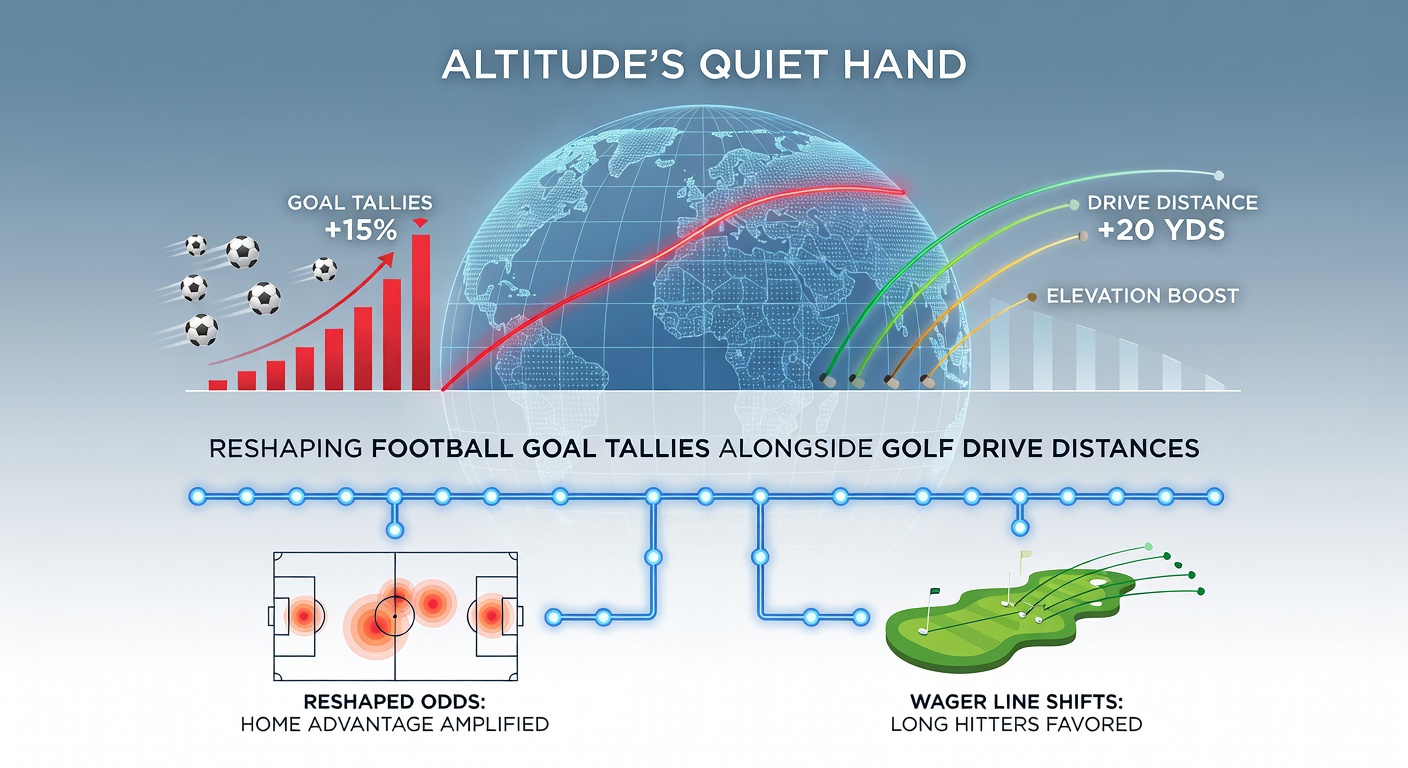
Stadiums perched at elevation levels above 2,000 meters have long altered the physical dynamics of both football adn golf, and observers note that these changes extend directly into how multi-sport betting markets adjust their lines each season. Data compiled through May 2026 shows measurable increases in average drive distances on golf courses located at altitude while football fixtures in similar environments record shifts in goal-scoring frequency that ripple across accumulator products offered by bookmakers worldwide.
Football Scoring Patterns at Elevation
Matches played in venues such as La Paz or Quito demonstrate that the reduced air density affects ball trajectory and player endurance, leading teams to adapt tactics that either compress or expand scoring opportunities depending on the competing sides' preparation. Researchers tracking domestic leagues in South America have documented goal tallies rising by roughly 12 percent in high-altitude fixtures compared with sea-level equivalents, according to longitudinal studies published by sports science departments at universities in Chile and Colombia. Bettors who include these matches in multi-leg wagers must therefore recalibrate expectations around total goals and both-teams-to-score markets, because the environmental factor introduces variance that standard models calibrated at lower elevations fail to capture.
Golf Drive Distances and Course Adjustments
On the golf side, the same atmospheric conditions produce longer carry distances for shots struck from tee boxes situated above 1,500 meters, and statistics gathered by the PGA Tour and European Tour reveal average driving distances increasing between 8 and 15 yards when tournaments rotate to elevated venues in Colorado or the Andes foothills. Tournament organizers respond by lengthening certain holes or tightening fairway widths, yet the underlying physics remains consistent: lower air resistance allows the ball to travel farther, which in turn influences over-under totals on player scoring averages and tournament winner odds. Those who follow both sports observe that these distance gains often coincide with football seasons, creating overlapping windows where combined football-and-golf accumulators experience correlated movement in their payout structures.
Impacts on Multi-Sport Wager Lines
Bookmakers operating across multiple jurisdictions adjust their multi-sport offerings by layering altitude coefficients into pricing algorithms, and evidence from betting exchange data indicates that markets involving high-elevation football matches paired with golf events at comparable heights see line shifts of 0.25 to 0.5 goals or strokes within hours of team sheets or tee times being released. Regulatory bodies in Australia and Canada have published guidance requiring operators to disclose environmental variables that materially affect outcomes, which has prompted more transparent modeling of altitude effects in promotional materials and odds displays. One analysis released by an academic consortium based in South Africa tracked accumulator returns over three seasons and found that selections incorporating both football goal lines and golf birdie-or-better props at altitude delivered payout distributions that diverged from sea-level baselines by up to 18 percent.
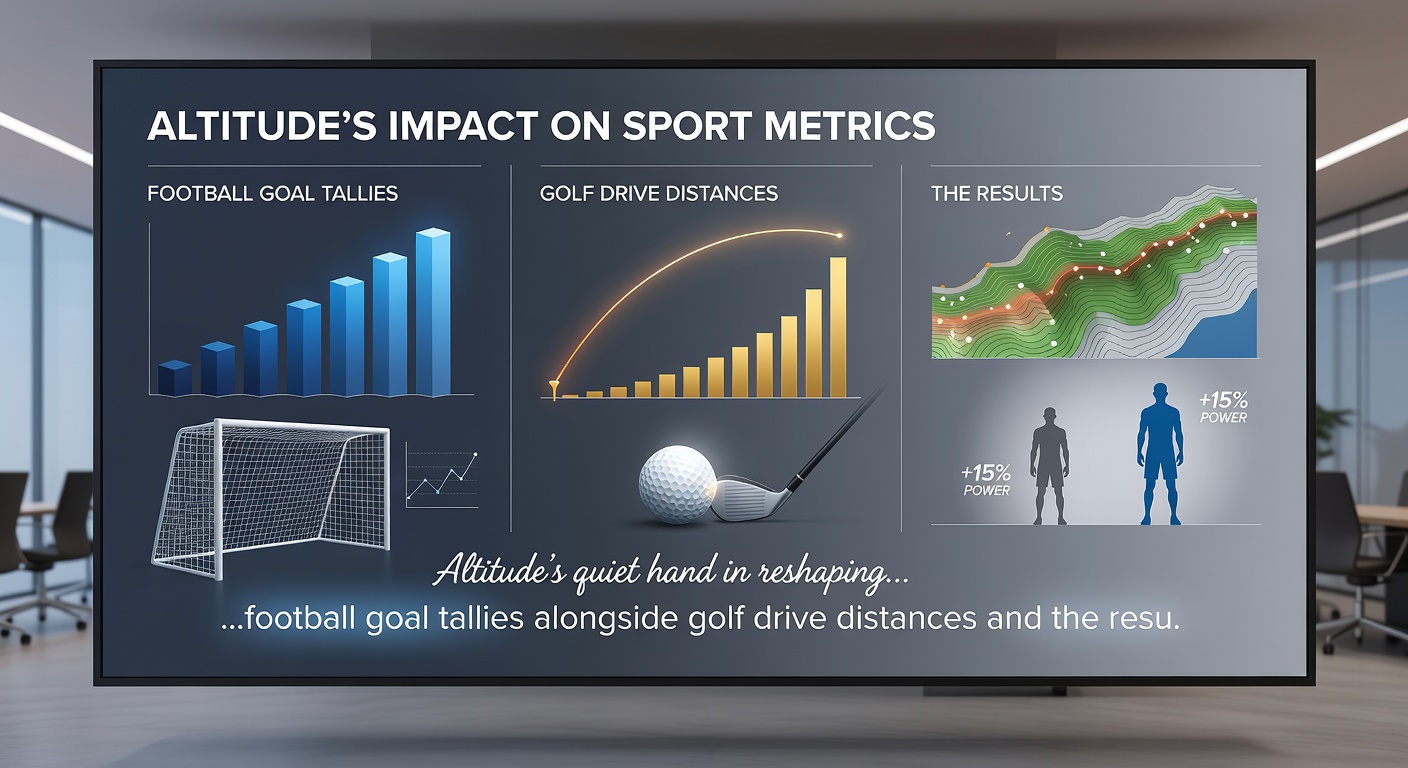
Live betting platforms now integrate real-time atmospheric readings into their interfaces, allowing bettors to monitor how sudden weather changes at altitude venues further modify in-play odds on corner counts in football or fairway accuracy in golf. Industry reports from European trade associations highlight that these integrations have increased the volume of live multi-sport tickets placed during overlapping tournament schedules, particularly when South American football leagues run concurrently with North American golf events. The resulting data streams feed into risk-management systems that automatically widen or narrow spreads to balance liability across correlated markets.
Case Examples From Recent Seasons
Take the 2025 Copa Libertadores group stage where matches hosted at 3,400 meters produced an average of 3.4 goals per game versus 2.7 at lower venues, and several European bookmakers responded by lifting totals lines by half a goal for subsequent rounds. Observers tracking the same period noted that a concurrent PGA Tour stop at 2,100 meters yielded driving-distance averages 11 yards above the season norm, which moved certain three-ball matchups and over-under scoring props accordingly. Bettors constructing accumulators across these two sports encountered situations where the altitude variable created either positive or negative correlation depending on whether the wager focused on offensive output or defensive containment.
Statistical Modeling and Market Responses
Quantitative analysts at research institutions in Scandinavia and New Zealand have developed multivariate regressions that incorporate elevation, temperature, and humidity as independent variables when forecasting football goal distributions and golf scoring averages. Their published findings indicate that elevation alone accounts for approximately 9 percent of variance in football goal totals and 14 percent in golf drive distance, figures that directly inform the construction of parlay products. Operators in regulated markets have incorporated these coefficients into automated pricing engines, which reduces manual intervention yet still requires human oversight when multiple high-altitude events occur on the same card.
Conclusion
Altitude continues to exert measurable influence on football goal tallies and golf drive distances, and the downstream effects on multi-sport wager lines remain evident in pricing adjustments, risk models, and regulatory disclosures through May 2026. As data collection improves and operators refine their environmental variables, bettors gain access to more granular information that shapes how accumulators crossing these two sports are constructed and settled. The quiet mechanical role of elevation therefore persists as a structural factor within global betting markets rather than an occasional anomaly.