10 Jul 2026
Calendar Clashes and Market Ripples: Aligning Global Schedules to Spot Overlap Potentials Across Disciplines
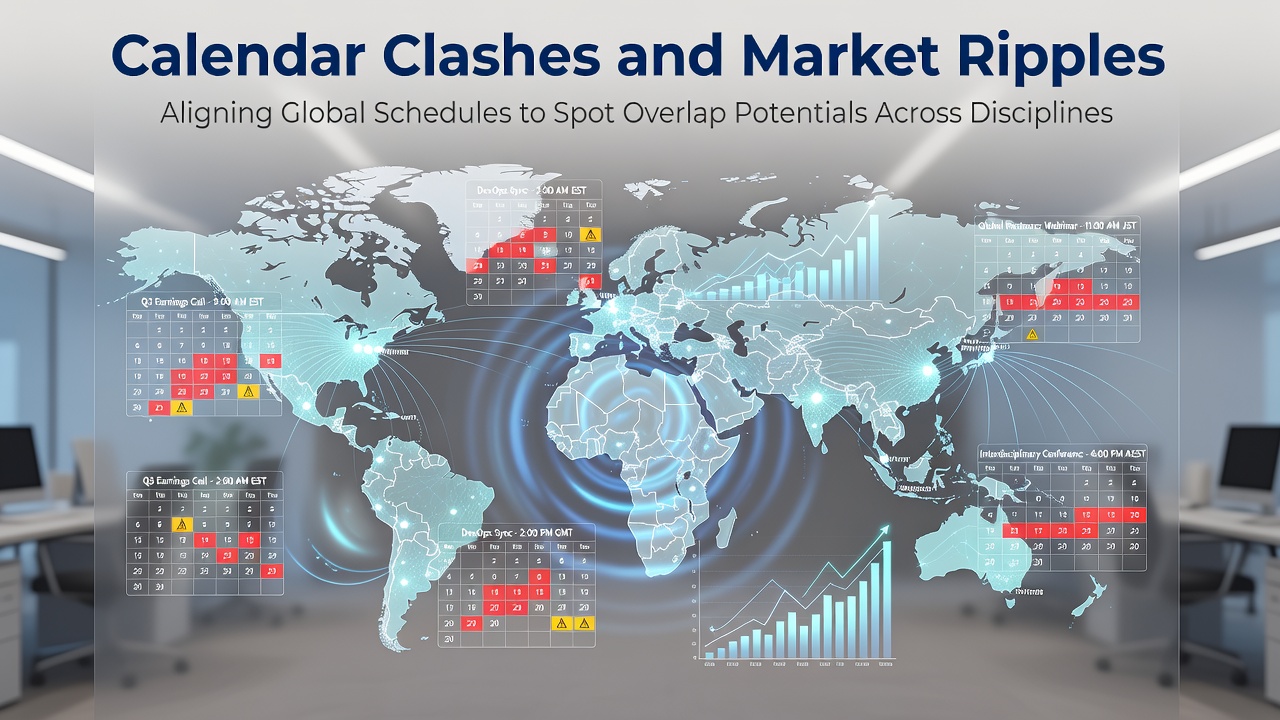
Global professionals across finance, academia, technology, and international affairs face recurring calendar pressures when major reporting cycles, conferences, and policy summits land in the same weeks. These overlaps generate measurable effects on trading volumes, research output timing, and cross-border coordination, according to data compiled by multilateral institutions. Observers note that identifying these intersection points allows organizations to adjust timelines before liquidity shifts or resource constraints appear.
Corporate Reporting Periods and Academic Conference Windows
Quarterly earnings releases from major exchanges often coincide with peak seasons for academic gatherings in economics and business studies. Data from the Organisation for Economic Co-operation and Development shows that earnings seasons in North America and Europe cluster between late January and mid-February as well as late July through August. Researchers tracking publication patterns find that conference submissions in these fields drop when analyst calls dominate executive calendars. Companies that shift non-mandatory announcements outside these windows report steadier analyst coverage and fewer last-minute revisions in consensus estimates.
Sports Mega-Events and Financial Market Activity
Large-scale sporting calendars create distinct liquidity patterns in related sectors. The 2026 FIFA World Cup, scheduled across June and July in North America, overlaps with mid-year corporate reporting deadlines in several host countries. Historical records from central banks indicate that equity trading in sponsor industries experiences brief volume spikes during opening and closing matches, while currency pairs tied to participating economies show elevated intraday ranges. Planners who map these dates against earnings calendars can pre-position communications to avoid competing for attention in the same news cycle.
International Policy Summits and Sector-Specific Timelines
G20 and APEC meetings rotate through different host cities each year, frequently landing near fiscal reporting deadlines or university examination periods. Records maintained by the Bank for International Settlements reveal that announcements released during these gatherings receive wider pickup in global media, yet simultaneous corporate disclosures sometimes dilute the policy signal. Health-sector conferences scheduled in the same month add another layer when regulatory agencies issue guidance on overlapping days. Alignment tools used by multinational teams allow advance mapping of these dates so that submissions and press releases reach target audiences without direct competition.

July 2026 Overlap Patterns
July 2026 contains several converging deadlines. Corporate filers in multiple jurisdictions must submit half-year results while universities finalize summer research programs and international organizations prepare for autumn assemblies. Records from statistical agencies show that trading desks handling cross-listed equities often reduce position sizes during these compressed periods to manage settlement risk. Technology firms releasing product updates around the same time face additional scrutiny when media attention splits between earnings commentary and policy announcements. Teams that build shared calendars across departments detect these convergences weeks ahead and redistribute workloads accordingly.
Cross-Discipline Coordination Practices
Organizations that maintain centralized scheduling databases report fewer missed submissions and smoother resource allocation. Universities that publish examination timetables alongside major financial reporting dates help corporate recruiters plan campus visits without clashing with peak academic activity. Industry associations that publish annual calendars listing both policy meetings and sector conferences enable members to select attendance dates that minimize internal conflicts. These practices rely on publicly available data from regulatory filings, academic registries, and intergovernmental secretariats rather than proprietary forecasts.
Conclusion
Calendar overlaps across corporate, academic, sporting, and policy domains produce predictable shifts in attention and resource availability. Mapping these intersections using official schedules from diverse regions helps organizations anticipate periods of elevated activity and adjust their own timelines. Consistent use of shared planning tools reduces last-minute adjustments while preserving the integrity of reporting cycles and research outputs. As global connectivity increases, the ability to align schedules across disciplines becomes a measurable factor in operational efficiency.