5 Aug 2026
Charting Circadian Disruptions Across Global Events to Refine Layered Predictions in Team and Solo Disciplines
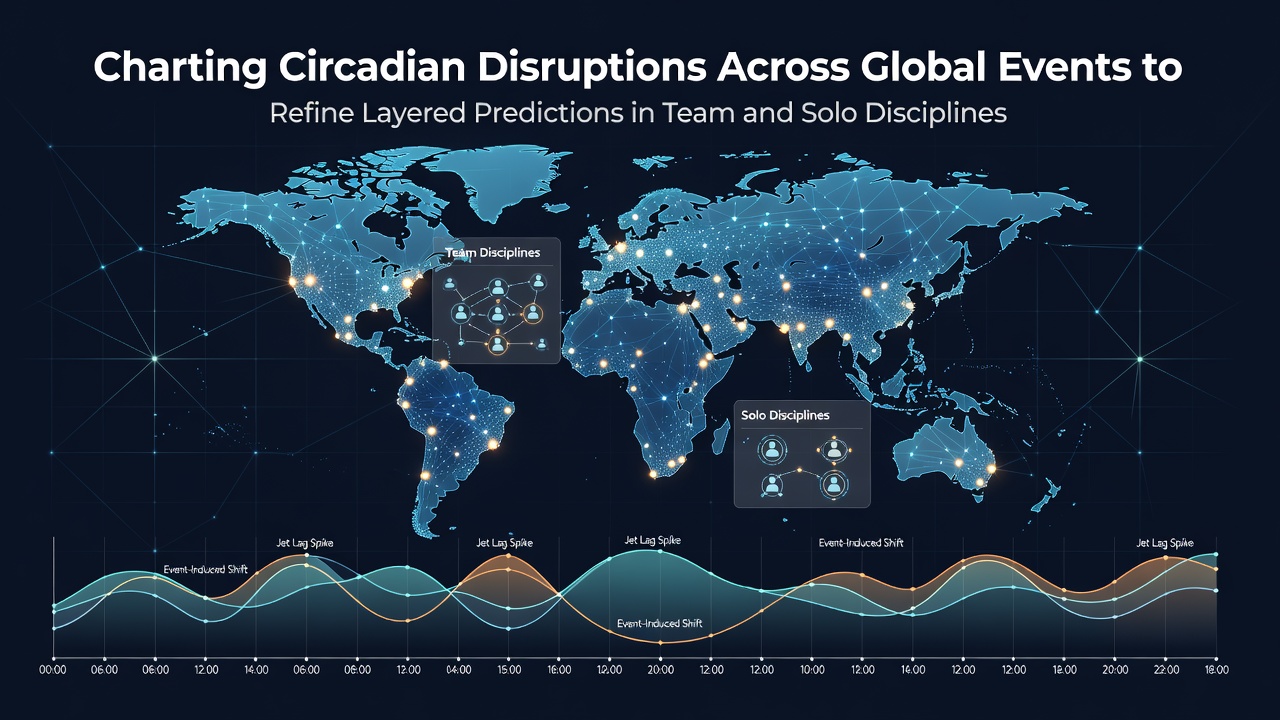 Researchers track how travel across multiple time zones disrupts internal body clocks during major international competitions, and data from these events helps build more accurate models for performance forecasting in both team and individual sports. Studies compile physiological markers such as core body temperature cycles, melatonin onset, and sleep efficiency to map the scale of disruption athletes face when crossing continents.
Core Mechanisms Behind Circadian Shifts
Human circadian systems operate on roughly 24-hour cycles regulated by the suprachiasmatic nucleus, and rapid relocation to new time zones forces these systems to realign at rates that vary between individuals and event types. Eastward travel typically requires more days for full adaptation than westward journeys because the body clock must advance rather than delay, according to findings from the National Institutes of Health. Athletes competing within 48 hours of arrival often show reduced reaction times and altered endurance thresholds until resynchronization completes.
Global events provide natural laboratories for these observations because they gather competitors from every longitude under identical competition conditions. Records from the 2026 FIFA World Cup preparations in North America, for instance, allowed researchers to compare squads arriving from South America, Europe, and Asia within the same tournament window in August 2026.
Team Sport Responses to Time Zone Changes
Team disciplines such as football and basketball involve coordinated actions where individual timing errors compound across players, and layered prediction models must account for collective adaptation rates. Data collected during transcontinental tournaments shows that squads traveling more than six time zones experience elevated error rates in passing accuracy and defensive positioning during the first three matches. These patterns emerge consistently because group synchronization depends on each member reaching similar circadian alignment simultaneously.
Coaches adjust training loads and recovery protocols based on these documented timelines, while statisticians incorporate travel distance and direction into performance baselines. One study from the Australian Institute of Sport tracked multiple national teams across three consecutive World Cup qualification cycles and identified repeatable decrements in high-intensity running metrics that persisted until day five post-arrival.
Solo Discipline Patterns and Individual Variability
Individual sports such as tennis, golf, and combat events allow researchers to isolate personal circadian responses without the added variable of team coordination. Tennis players crossing the International Date Line display measurable drops in serve accuracy and rally endurance that correlate directly with the number of time zones traversed, yet recovery trajectories differ markedly between morning and evening types. Golf performance data similarly reveals that putting precision and club-head speed recover at different rates depending on whether the athlete competes in morning or afternoon rounds during the adjustment period.
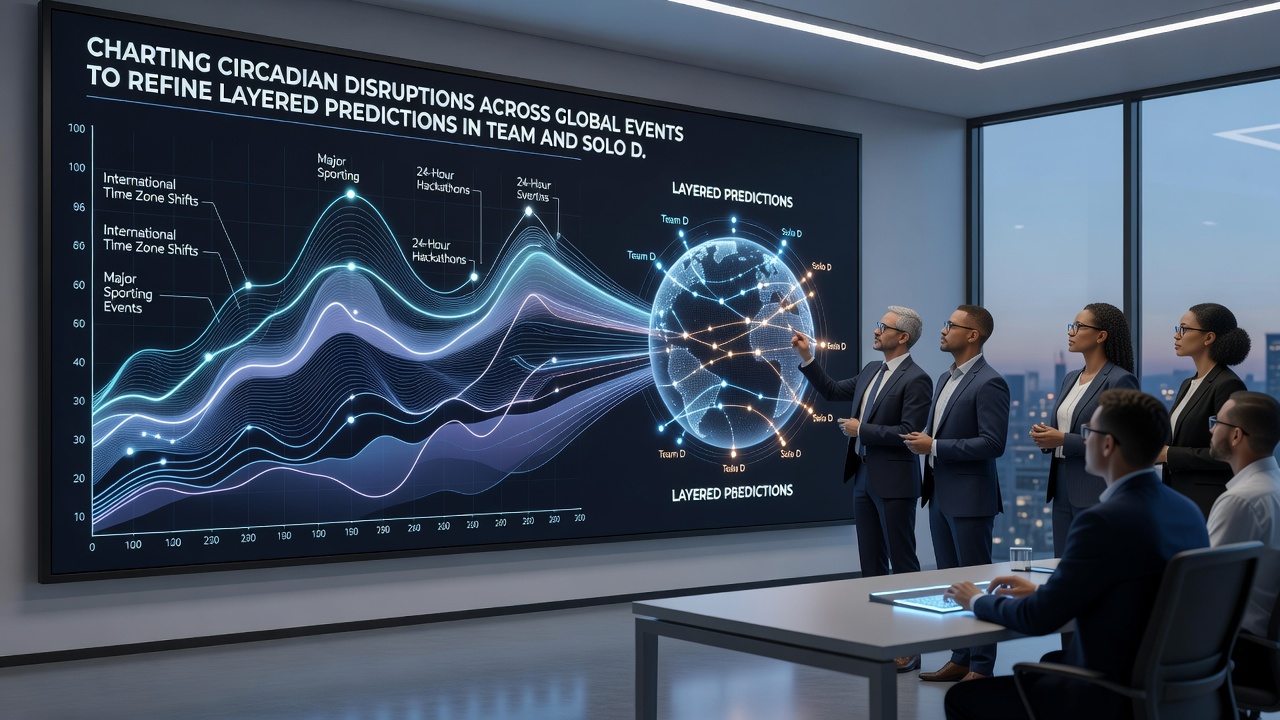
Prediction frameworks refine their accuracy by layering these individual baselines against historical event data, and analysts now separate circadian effects from other factors such as surface conditions or opponent strength. Observers note that solo competitors often receive more personalized scheduling accommodations at major championships, which in turn supplies cleaner datasets for modeling purposes.
Building Layered Prediction Systems
Modern forecasting tools combine travel logs, chronotype questionnaires, and real-time biometric readings to generate multi-layered projections that update as events unfold. These systems weight circadian disruption higher for solo events where margins are smaller and lower for team formats where tactical adjustments can offset some physiological deficits. Research institutions in Canada and the European Union have published joint reports showing that incorporating circadian variables improves forecast precision by measurable margins across both discipline categories.
August 2026 provided an unusually dense dataset because several major tournaments overlapped in the same month, allowing direct comparison of adaptation profiles under similar calendar pressures. Analysts cross-referenced arrival times, match schedules, and performance outputs to test and calibrate the models against live outcomes.
Future Refinements and Data Integration
Continued collection of physiological and performance metrics from upcoming global events will further sharpen these predictive layers, particularly as wearable technology delivers higher-resolution sleep and alertness data. Integration of environmental factors such as venue latitude and competition timing adds another dimension that researchers continue to validate against existing records. The result is a growing body of evidence that allows organizers and support staff to anticipate when and how circadian disruptions will influence outcomes in both team and solo settings.
Conclusion
Charting circadian disruptions across successive international competitions supplies the empirical foundation needed to refine performance predictions with increasing granularity. Team and solo disciplines each present distinct adaptation signatures that layered models can now isolate and quantify, turning travel-related variables into predictable inputs rather than unknown factors. As datasets expand through events scheduled through 2026 and beyond, the precision of these forecasts will continue to advance.