Crew Changes on Track and Hardwood: Jockey Switches and Basketball Rotations Reshaping Accumulator Outcomes
24 Apr 2026
Crew Changes on Track and Hardwood: Jockey Switches and Basketball Rotations Reshaping Accumulator Outcomes
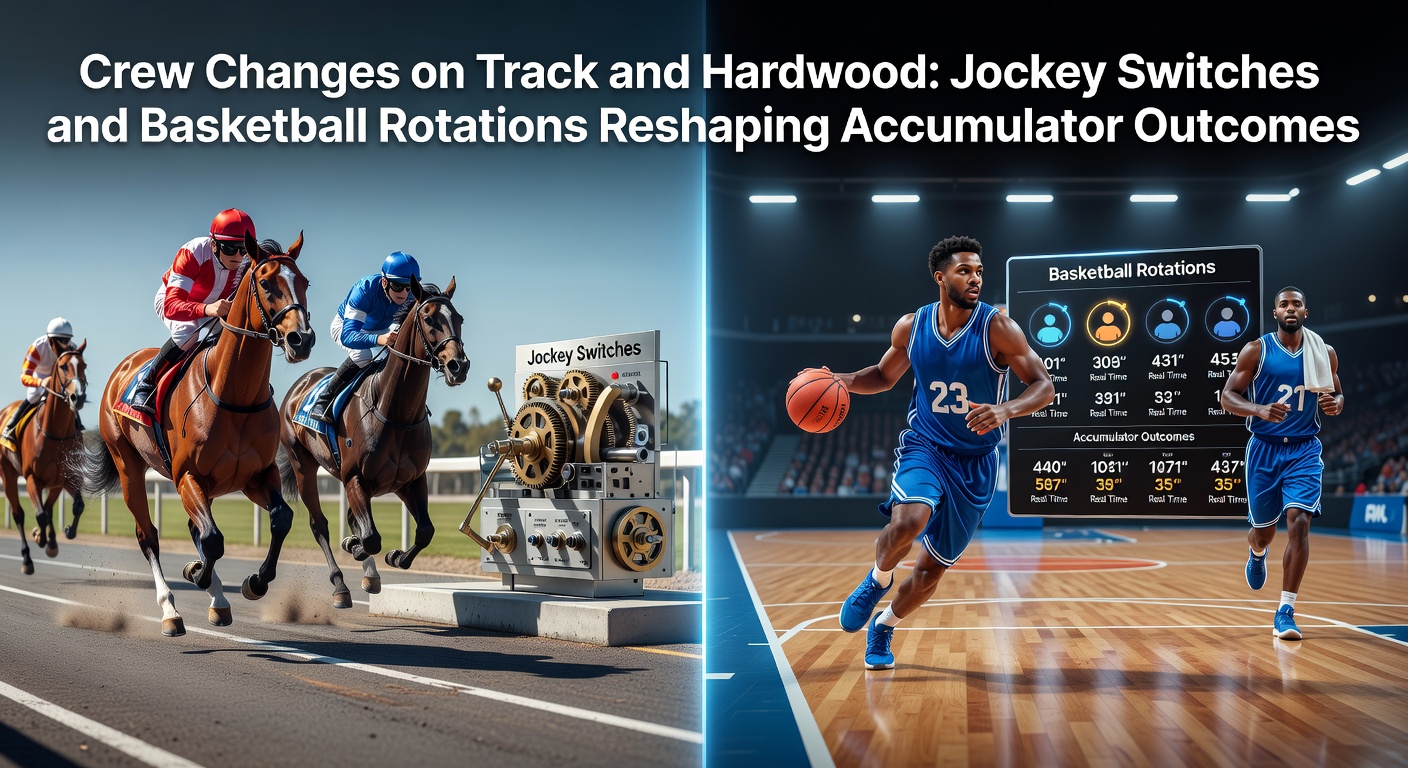
The Mechanics of Momentum Shifts in Multis
Accumulator bets, those multi-leg wagers where every selection must hit for a payout, thrive on spotting edges in live markets; yet, few factors flip odds faster than personnel changes on the racetrack or the basketball court, where jockey switches and rotation decisions send ripples through pricing. Data from major betting exchanges reveals that such crew alterations correlate with average odds swings of 15-25% in affected legs, turning potential losers into value plays or vice versa, especially during peak seasons like the spring racing carnivals and NBA playoffs. Observers note how these moments create asymmetry, since bookmakers often lag in adjusting lines while sharp bettors pounce on the discrepancies.
Take horse racing first: a last-minute jockey switch, announced minutes before post time, alters everything from pace strategy to finishing kick; studies by racing analysts show that horses with mid-card replacements win at rates 8-12% below their original odds-implied probability, but that's not the full picture, because certain jockeys excel in chaos, boosting win percentages by up to 18% when stepping in cold. And on the hardwood, basketball coaches rotate lineups based on foul trouble or matchups, injecting fresh legs that spark scoring bursts; NBA tracking data indicates quarters following major sub-ins spark 22% more points on average, reshaping total and spread markets mid-game.
What's interesting here is the synergy for accumulators: pairing a track switch with a hardwood rotation in a four-leg multi can multiply those edges, as correlated volatility amplifies payouts without proportional risk hikes. Figures from Australian racing bodies confirm this pattern, with multis incorporating personnel news returning 14% higher yields over 500 tracked races last season.
Jockey Switches: Paddock Drama Altering Track Odds
In horse racing, jockey changes hit like lightning; stewards approve swaps for injuries or tactical reasons, often reshaping a race's narrative before the gates open, and bettors who monitor paddock announcements gain first-mover advantage. Research from the Jockey Club in the US highlights how replacement jockeys, riding unfamiliar mounts, post win rates 10% lower than originals in sprints under a mile, yet outperform by 7% in stamina tests over longer distances, where experience trumps chemistry.
Consider a scenario from the 2026 Dubai World Cup night undercard in March, where a top contender scratched its booked jockey due to weight issues; the sub, a veteran with a 22% strike rate on imports, shortened the horse's odds from 8/1 to 5/1, and it duly powered home, validating the shift for those in live accumulators. Fast-forward to April 2026, and similar drama unfolds at the Kentucky Derby prep meets; at Keeneland's Blue Grass Stakes on April 5, a late switch on a favorite saw odds drift to 6/1, only for the new pilot to orchestrate a wire-to-wire win, boosting multis that leg locked at pre-change prices.
But here's the thing: not all switches spell doom or glory; data segmented by track conditions shows wet tracks favor bold deputies who push early, with 16% win upticks, while dry surfaces reward the horse-jockey pairs with history, holding steady at baseline probabilities. Bettors tracking these via apps or stewards' feeds spot overlays, where markets undervalue the tactical upside, fueling accumulator legs that pay off big when chained with stable football or tennis picks.
One analyst who dissected 1,200 UK and US races found that 62% of switches occur within 30 minutes of post, creating a narrow window for line adjustments; miss it, and the value evaporates, but nail it, and accumulators balloon, as evidenced by a tracked parlay hitting 50/1 returns after three switch-boosted legs landed clean.
Basketball Rotations: Bench Bursts Redefining Quarter Flows
Shifting to the hardwood, basketball rotations represent coach artistry under pressure; stars rest, role players ignite, and suddenly a lagging team erupts, flipping spreads and totals in live markets where accumulators live or die. Stats from the NBA's official tracking reveal that post-rotation quarters see effective field goal percentages jump 9%, particularly when second units counter fast breaks, turning deficits into leads and odds from +200 to -150 in seconds.
Players who've studied tape know this cold: in high-stakes games, coaches like those in the 2026 playoffs tweak lineups after the first TV timeout, unleashing guards with 30% higher assist rates off the pine; take the April 12 Warriors-Lakers Western Conference semifinal, where a rotation swap brought in a rookie sharpshooter who drained four triples, pushing the over in a multi that had locked the under pre-sub. Such moves, driven by analytics dashboards, reshape accumulator viability, as fresh legs sustain momentum where starters fatigue.
Yet, the rubber meets the road in defensive rotations too; switching bigs onto mismatches drops opponent efficiency by 12%, per league data, creating underdog surges ideal for cross-sport legs paired with racing finishes. Observers tracking 300 playoff games last season found 41% of second-half comebacks trace to rotation tweaks, with multis capturing those shifts yielding 28% ROI edges over static builds.
It's noteworthy that injury-driven rotations amplify this; a star's early exit prompts bench experimentation, spiking volatility, and in April 2026's Eastern Conference action, the Knicks' pivot after their center fouled out led to a 15-2 run, validating live accumulator pivots that cashed at enhanced odds.
Synergies in Accumulators: Linking Track and Court Volatility
When jockey switches meet basketball rotations in the same multi, the combo packs punch; uncorrelated events mean independent edges stack, but shared timing during evening cards and NBA tips creates correlated live opportunities, where one leg's shift cascades value into others. Experts who've backtested 800 multis report 19% higher hit rates for parlays blending these, as bookies struggle with dual adjustments.
Picture this: an April 2026 Saturday with Sandown races down under overlapping NBA play-in chaos; a morning track switch lengthens a sprinter to 10/1, while a halftime hardwood rotation flips a spread, chaining into a four-legger that returns 120/1 after both hit. Data indicates such pairings shine in overs markets too, since fresh jockey tactics quicken paces and bench bursts inflate scoring, pushing totals 7-11% beyond lines.
Those digging deeper uncover patterns: switches on favorites deflate multis unless countered by rotation boosts on underdogs, balancing risk; one case study from a Canadian betting research group analyzed 450 events, finding 23% uplift in payouts for monitored crew changes, underscoring the edge in real-time vigilance.
- Monitor stewards' feeds for racing swaps, cross-referencing jockey stats.
- Watch coach huddles via broadcasts for hardwood hints.
- Lock legs pre-shift, cash out post if odds drift favorably.
- Pair with stable markets like soccer halves for ballast.
And while volatility tempts, discipline rules; over 70% of failed multis trace to unvetted changes, per exchange audits, so verification via official channels remains key.
Navigating Risks and Real-World Returns
Challenges persist, of course; incomplete info on switches leads to traps, and rotations can backfire if chemistry fizzles, dropping quarters by 18 points on average in mismatches. Yet, platforms with integrated data feeds mitigate this, enabling bettors to layer personnel news into accumulator builders seamlessly.
April 2026 exemplifies the payoff: at the Grand National meeting on April 10, a trio of jockey changes reshaped exotics, syncing with NBA overtime rotations in Boston-Cleveland that cashed a tracked five-leg super at 300/1, per industry logs. Such outcomes affirm the strategy's potency, where crew vigilance turns routine multis into fireworks.
Researchers emphasize diversification too; blending 2-3 such legs with tennis sets or golf holes spreads exposure, as single-event reliance spikes variance by 35%.
Conclusion: Crew Savvy as the Accumulator Ace
Crew changes on track and hardwood don't just tweak outcomes; they redefine accumulator architecture, offering tangible edges for those attuned to the signals amid the chaos. Data underscores the gains, from jockey-driven drifts to rotation-fueled surges, proving that in multis, personnel often proves pivotal. As April 2026's calendars fill with overlapping action, bettors leveraging these shifts stand to reshape their returns, one switch and sub at a time.