24 May 2026
Cross-Sport Injury Timelines and Cascading Impacts on Multi-Event Betting Markets in Football, Tennis, and Golf
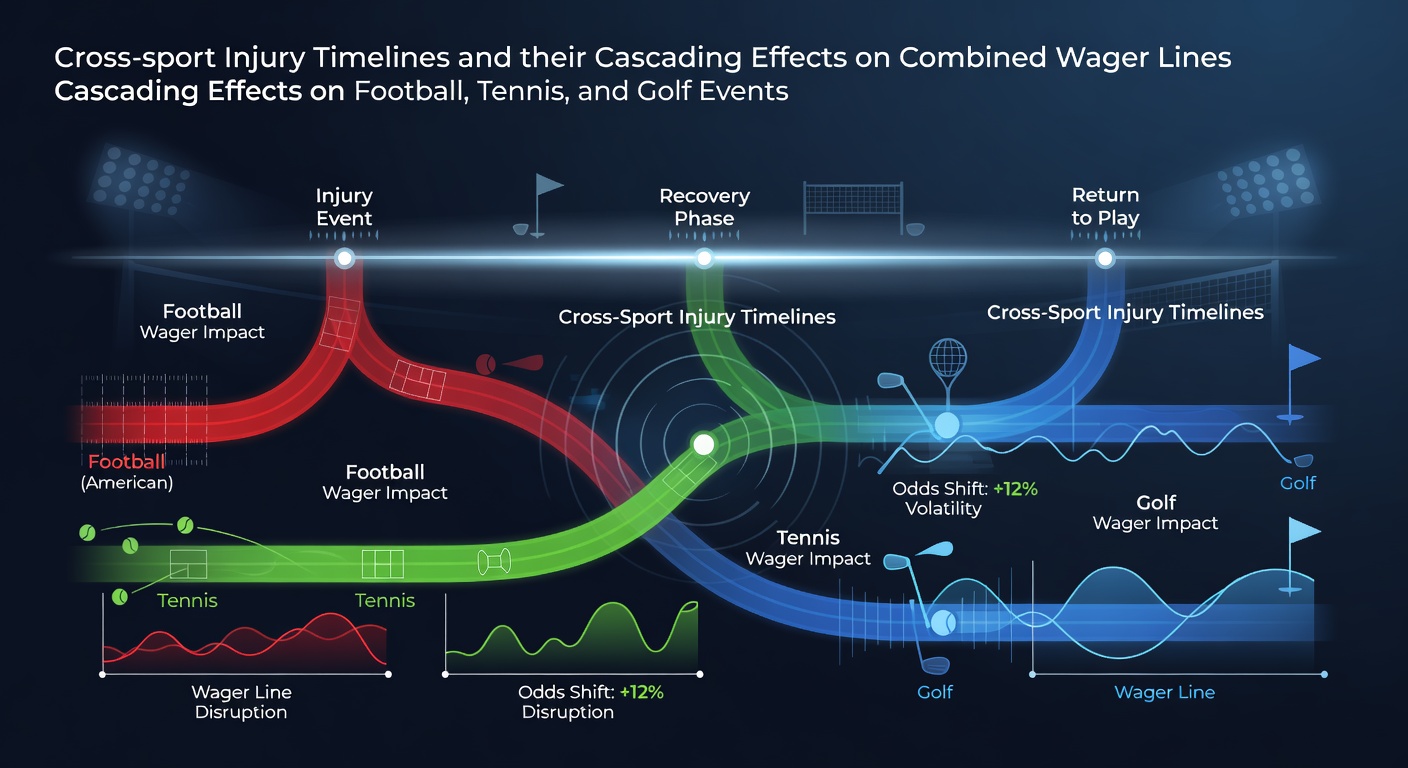
Football players recovering from anterior cruciate ligament tears typically require six to nine months before returning to competitive action, while tennis athletes dealing with wrist or elbow tendinopathy often face four to twelve week absences depending on severity, and golfers managing lumbar disc issues encounter recovery spans that stretch from three to six months before full swing mechanics return. These varying timelines create ripple effects when bettors construct combined wager lines that link outcomes across the three sports, because an extended absence in one discipline alters team or individual probabilities that then shift accumulator odds in connected markets.
Football Injury Patterns and Market Adjustments
Studies compiled by the American Orthopaedic Society for Sports Medicine reveal that hamstring strains account for roughly 37 percent of all time-loss injuries in professional football leagues, with average return-to-play durations landing between two and four weeks for grade-one cases yet extending past eight weeks when re-injury occurs. When a starting striker misses a stretch of matches, goal-scoring totals in that squad drop measurably, which in turn modifies the probability calculations inside multi-leg bets that pair football results with tennis match totals or golf tournament finishes. Observers tracking May 2026 schedules noted that several European clubs reported cluster injuries during congested fixture periods, prompting oddsmakers to widen spreads on both outright and handicap lines that later fed into cross-sport accumulator constructions.
Tennis Recovery Windows and Live Line Shifts
Tennis players experience shoulder and elbow complaints at rates exceeding 25 percent annually according to data tracked by the International Tennis Federation medical commission, with many cases requiring rest periods between three and eight weeks before serve velocity and accuracy normalize. A prolonged absence for a top seed at a clay-court event in late spring can elevate underdog win probabilities, thereby changing the payout multiples when those tennis selections combine with football over/under goals or golf birdie totals in the same wager. Because tennis draws unfold daily during grand-slam windows, even short-term injuries generate rapid adjustments that propagate through betting exchanges and influence the overall value of multi-sport tickets still holding open legs in other disciplines.
Golf Injury Durations and Leaderboard Effects
Back and wrist ailments represent the most common time-loss issues among professional golfers, with research published in the Clinical Journal of Sport Medicine indicating average recovery intervals of four to ten weeks before players regain competitive driving distance and putting consistency. When a ranked player withdraws from a designated event, the redistribution of field strength alters finishing-position probabilities, which then recalibrates combined lines that link golf leaderboards to football clean-sheet markets or tennis set spreads. In May 2026 several PGA and DP World Tour stops overlapped with European football title races and clay-court tennis swing weeks, creating simultaneous exposure windows where a single golf withdrawal could recalibrate accumulator odds across all three sports within hours.
Cascading Effects Across Combined Wager Lines
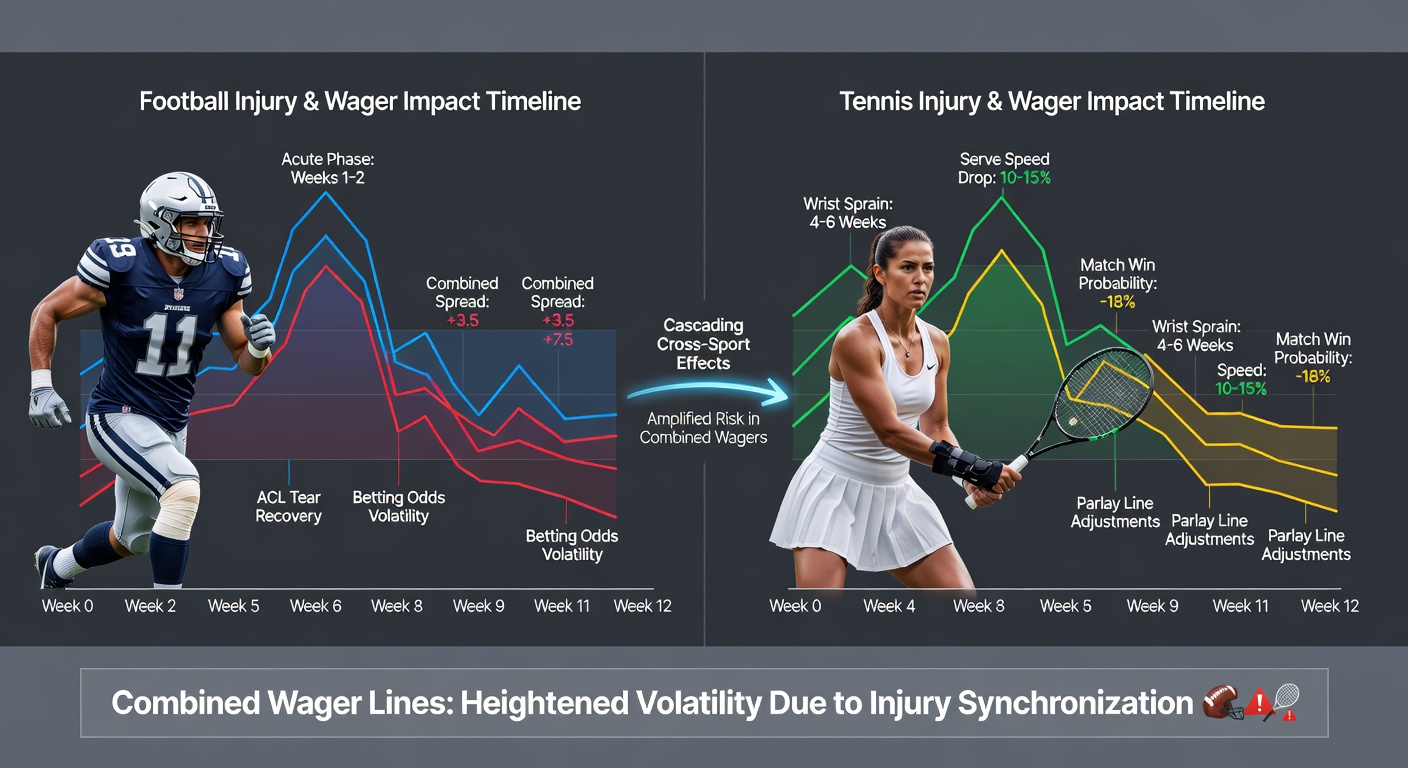
Combined wager lines function by multiplying implied probabilities from each leg, so an injury-driven shift in any single sport recalibrates the entire ticket value once that leg locks in or moves to a new price. Data compiled by the National Collegiate Athletic Association injury surveillance program shows that athletes returning from extended layoffs post lower performance benchmarks for the first three to five competitions, a pattern replicated across football, tennis, and golf. When such reduced output occurs in one leg of an accumulator, the remaining open selections in the other sports must overcome a larger implied margin to reach the original target payout, prompting bettors and syndicates to hedge or restructure remaining combinations mid-tournament.
Because football seasons run continuously while tennis grand slams and golf majors occupy fixed calendar slots, injury announcements frequently arrive during overlapping competition blocks, producing concurrent line movements that compound across platforms. A midfielder ruled out for six weeks in early May can coincide with a tennis player withdrawing from a Madrid or Rome warm-up and a golfer missing a signature event, creating three separate probability adjustments that together reshape the settlement value of any accumulator containing all three components. Market makers respond by widening spreads or suspending certain cross-sport combinations until clearer participation news emerges, which further concentrates liquidity into narrower sets of available lines.
Monitoring Timelines for Market Participants
Those constructing multi-sport accumulators track medical updates through official club announcements, tournament reports, and league-mandated injury lists, then map the stated recovery windows against historical return-to-play benchmarks. When timelines stretch beyond initial estimates, the affected leg often moves from a near-certain outcome to a coin-flip proposition, altering the required win rate on remaining selections. Observers noted during the 2026 spring calendar that several high-profile accumulators were re-priced after late medical withdrawals in golf and tennis overlapped with midweek football postponements, illustrating how staggered injury disclosures can cascade through live betting interfaces even after initial ticket placement.
Conclusion
Injury timelines in football, tennis, and golf operate on distinct yet interconnected cycles that directly influence the pricing and settlement of combined wager lines spanning the three sports. Because recovery durations vary from weeks to months, each absence recalibrates performance probabilities that then propagate through accumulator structures, requiring continuous adjustment of remaining legs to preserve target returns. Data from multiple sports-medicine registries confirm these patterns recur across seasons, producing measurable shifts in market depth whenever participation news arrives during overlapping competition periods.