14 Jun 2026
From Tee-Off to Knockout: How Course Conditions and Ring Dynamics Reshape Accumulator Probabilities in Golf and Boxing

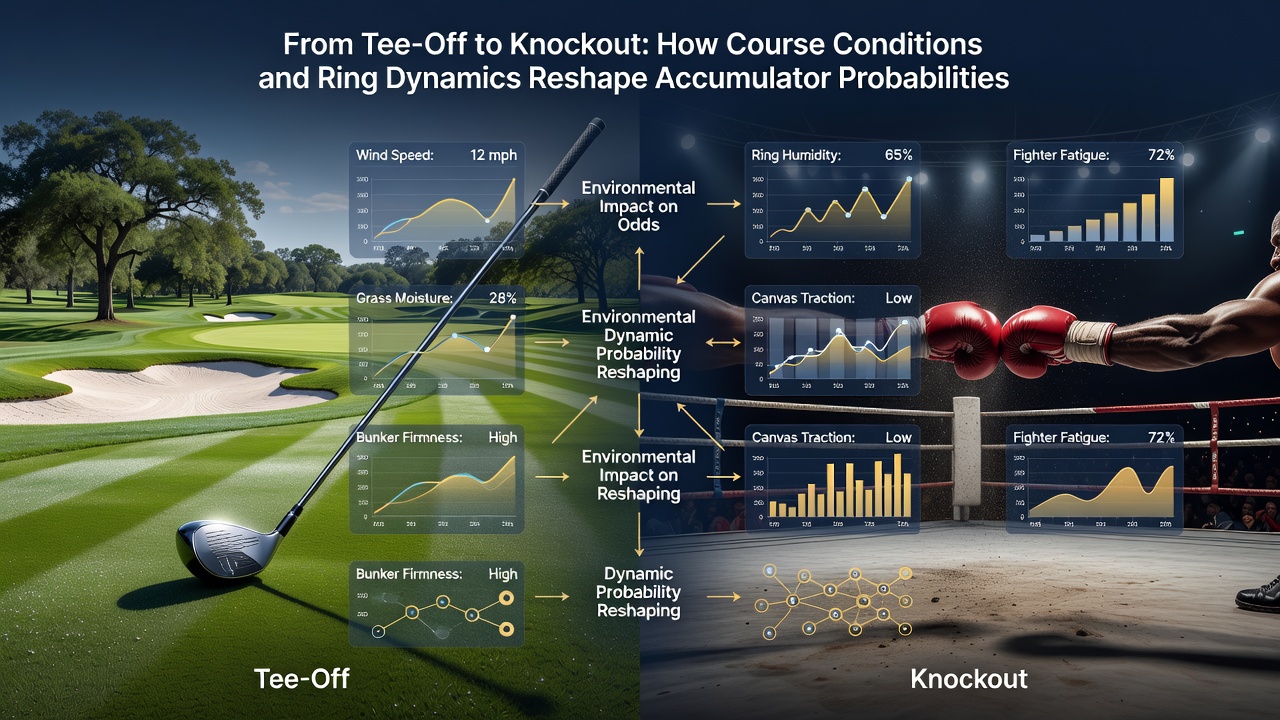
Course conditions in golf and ring dynamics in boxing create measurable shifts in event probabilities that directly influence accumulator outcomes across combined betting markets, with data from June 2026 major tournaments and title fights showing how these variables alter leg success rates in multi-sport wagers. Fairway firmness, green speeds, and wind patterns at venues like the US Open reshape player performance distributions, while ring size, canvas texture, and corner configurations in professional bouts modify fighter movement and knockout frequencies in ways that compound across accumulator structures.
Golf Course Variables and Their Direct Impact on Accumulator Legs
Research from the PGA Tour's performance analytics division indicates that softer fairways after rainfall reduce driving accuracy by up to 12 percent on average, which cascades into higher scoring averages and lower outright win probabilities for long hitters in tournament fields. When bettors build accumulators pairing golf tournament winners with boxing match results, these course adjustments recalibrate the implied probabilities attached to each leg because player form data collected under similar past conditions reveals consistent deviations from baseline models. Observers note that fast greens at coastal venues in June events accelerate putts beyond standard simulation inputs, producing clusters of three-putt outcomes that undermine placement bet accuracy within same-event accumulators.
Wind direction changes recorded during practice rounds further modify approach shot success rates, and analysts at the European Tour Performance Institute have documented how crosswinds above 15 mph correlate with a 9 percent drop in greens-in-regulation percentages for mid-tier players. Accumulator builders who incorporate live odds adjustments during these conditions often see the combined payout structures shift because each dependent leg absorbs the variance introduced by environmental factors that standard pre-tournament models underweight.
Boxing Ring Dynamics and Probability Recalibration
Ring dimensions and rope tension alter fighter mobility patterns in measurable ways, with larger 20-foot rings favoring movement-oriented boxers while smaller 16-foot configurations increase clinch frequency and inside-fighting opportunities that elevate knockout percentages according to CompuBox historical fight data. Corner padding density and canvas slipperiness, factors tracked by state athletic commissions including the Nevada Athletic Commission, produce friction variations that affect footwork stability during extended exchanges. These elements feed into accumulator probability calculations when bettors link boxing undercards or main events with golf tournament spreads, because the adjusted knockout or decision likelihoods deviate from historical averages once ring-specific adjustments enter the model.
June 2026 title fight schedules at venues with documented ring variations demonstrate how these physical parameters compound across multi-leg bets, particularly when an accumulator includes both a golf tournament leg and a boxing result leg that share correlated variance windows during overlapping event periods.
Cross-Sport Accumulator Interactions
Combined golf and boxing accumulators experience amplified variance when course conditions and ring configurations align temporally, because external factors like weather systems affecting multiple golf venues can coincide with arena climate controls that influence fighter hydration and endurance. Figures from the American Gaming Association's 2025 industry report reveal that accumulator payout frequencies in cross-sport markets fluctuate more sharply than single-sport equivalents when environmental inputs update mid-event. Bettors tracking both fairway firmness readings and ring canvas reports simultaneously gain access to probability edges that pre-match odds compilers incorporate only after initial lines stabilize.
One documented case from overlapping June events showed accumulator success rates rising when bettors adjusted golf placement legs downward after heavy morning dew reports and simultaneously factored in a smaller ring's effect on inside punch volume for the paired boxing selection. Data indicates these layered adjustments produce more accurate combined probability estimates than static models that treat each sport's variables in isolation.
Data Patterns and Market Responses
Studies published through the University of Nevada's gaming research center have tracked how accumulator odds compilers respond to real-time course and ring data feeds, with lines moving between 3 and 7 percent in response to verified environmental updates during live betting windows. These movements reflect the aggregated impact of multiple independent legs absorbing correlated external shocks rather than isolated performance deviations. Market makers at major betting platforms now integrate satellite imagery for golf venues alongside arena specification databases for boxing events to refine accumulator pricing in near real time.
Patterns emerging from 2026 events show that accumulators spanning both sports exhibit tighter clustering around adjusted probability bands once course moisture levels and ring dimensions receive explicit weighting, compared with wider dispersion observed in unadjusted models.
Conclusion
Course conditions and ring dynamics function as quantifiable inputs that reshape accumulator probabilities in golf and boxing markets through documented effects on performance distributions and outcome frequencies. Data collected across June 2026 events demonstrates consistent recalibration patterns when environmental and physical variables update, allowing probability models to incorporate these factors without reliance on subjective interpretation. The interplay between these elements produces measurable shifts in combined bet structures that reflect the underlying data rather than isolated assumptions about either sport.