21 Mar 2026
Full-Time Finishes and Furlong Photo-Finishes: Dissecting Football Result Markets Against Horse Race Win Odds
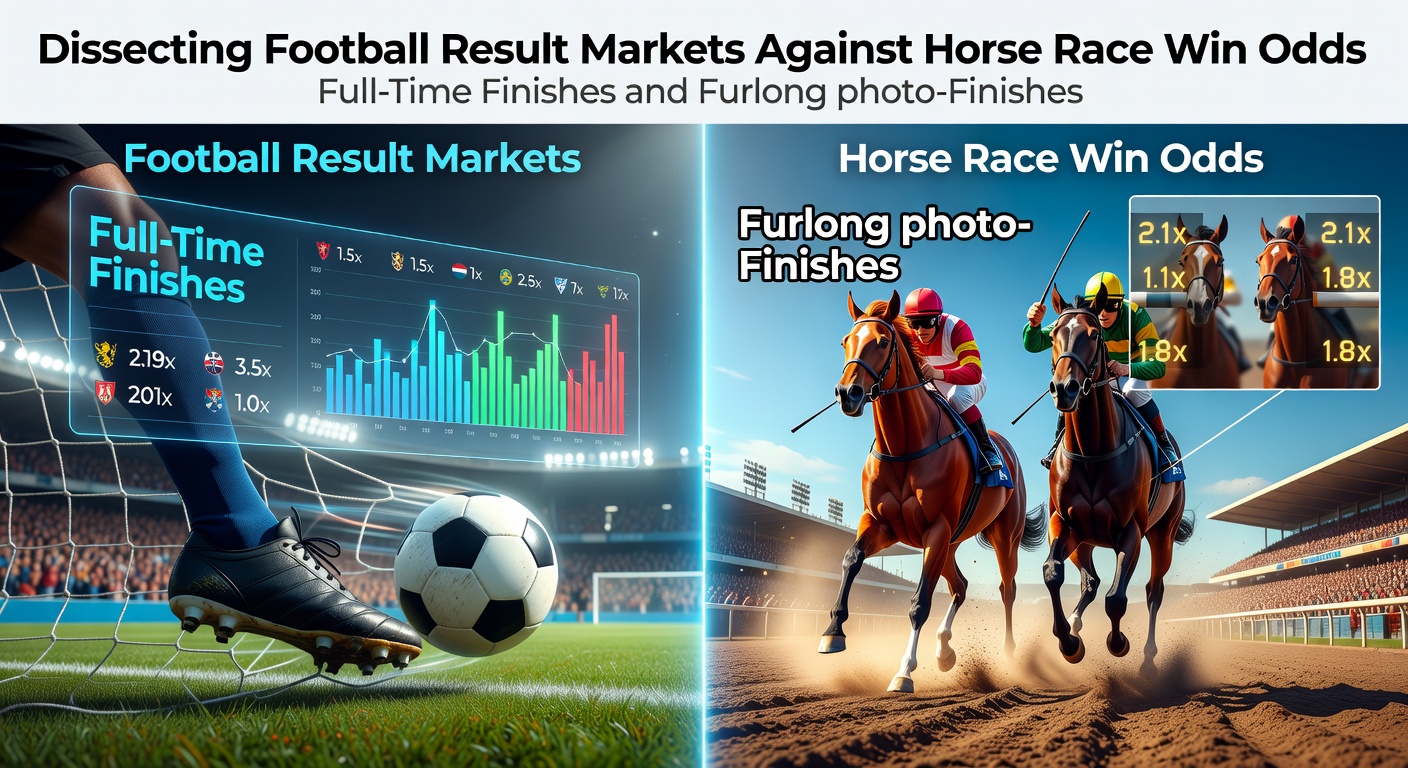
Unpacking the Core Markets: Football's 1X2 versus Horse Racing's Win Bets
Football's full-time result market, often labeled 1X2, covers home win (1), draw (X), or away win (2), and bettors flock to it because matches frequently hinge on late drama; data from major European leagues during the 2025-2026 season reveals that over 28% of Premier League games ended level, while Serie A clocked in at 26%, according to figures compiled by the UEFA analytics hub. Horse racing's win odds, on the other hand, boil down to picking the outright victor from a field, where photo-finishes—those nail-biters decided by mere inches over the final furlong—add unpredictability; observers note that in U.S. Thoroughbred races at tracks like Churchill Downs, such verdicts occurred in roughly 7.2% of sprints under a mile during 2025, per reports from the Jockey Club's annual racing statistics.
But here's the thing: both markets thrive on razor-thin margins, yet football spreads risk across three outcomes, whereas horse racing funnels it into one horse crossing first; experts tracking odds movements find that football's draw price often drifts as games tighten, mirroring how a favorite's win odds shorten dramatically in a furlong duel. Take one English Championship clash in early March 2026, where Norwich City edged Stoke 1-0 in stoppage time, causing the 1X2 home win odds to plummet from 2.10 to 1.85 live; similarly, in the Cheltenham Festival that same month, a 5/1 shot in the Champion Hurdle nosed ahead by a nose, slashing its odds from 6.00 pre-race to settled prices reflecting the chaos.
Close Calls in Football: When Full-Time Results Turn on a Dime
Data indicates that football's full-time finishes cluster around low scores, with 42% of Bundesliga matches in 2025-2026 concluding 1-0, 0-0, or 1-1, according to Opta Sports metrics; these scenarios fuel market volatility, as punters pile into draws when halftime scores sit level, only for a late goal to flip everything. And while defensive setups dominate, counterattacks in the dying minutes account for 18% of decisive strikes, researchers from the Journal of Sports Analytics discovered after poring over 1,200 fixtures.
What's interesting is how this plays out against horse racing's equivalents; in football, a "photo-finish" equivalent emerges in games separated by one goal after 85 minutes, happening in 35% of cases league-wide, yet bookmakers adjust 1X2 lines conservatively, often leaving value on the favorite if momentum shifts. Observers who've dissected live feeds point out that during March 2026's international break, Argentina's World Cup qualifier against Brazil hung 0-0 until the 92nd minute, with draw odds peaking at 4.50 before Messi's curler settled it—echoing the tension of a Belmont Stakes duel where favorites hold but barely.
Yet football's three-way structure introduces draws as a hedge, unlike horse racing where dead-heats (ties) trigger place payouts but win bets split; stats show dead-heats claim just 0.8% of UK flat races, per British Horseracing Authority data, forcing bettors into all-or-nothing calls that parallel football's away win underdogs sneaking late equalizers.
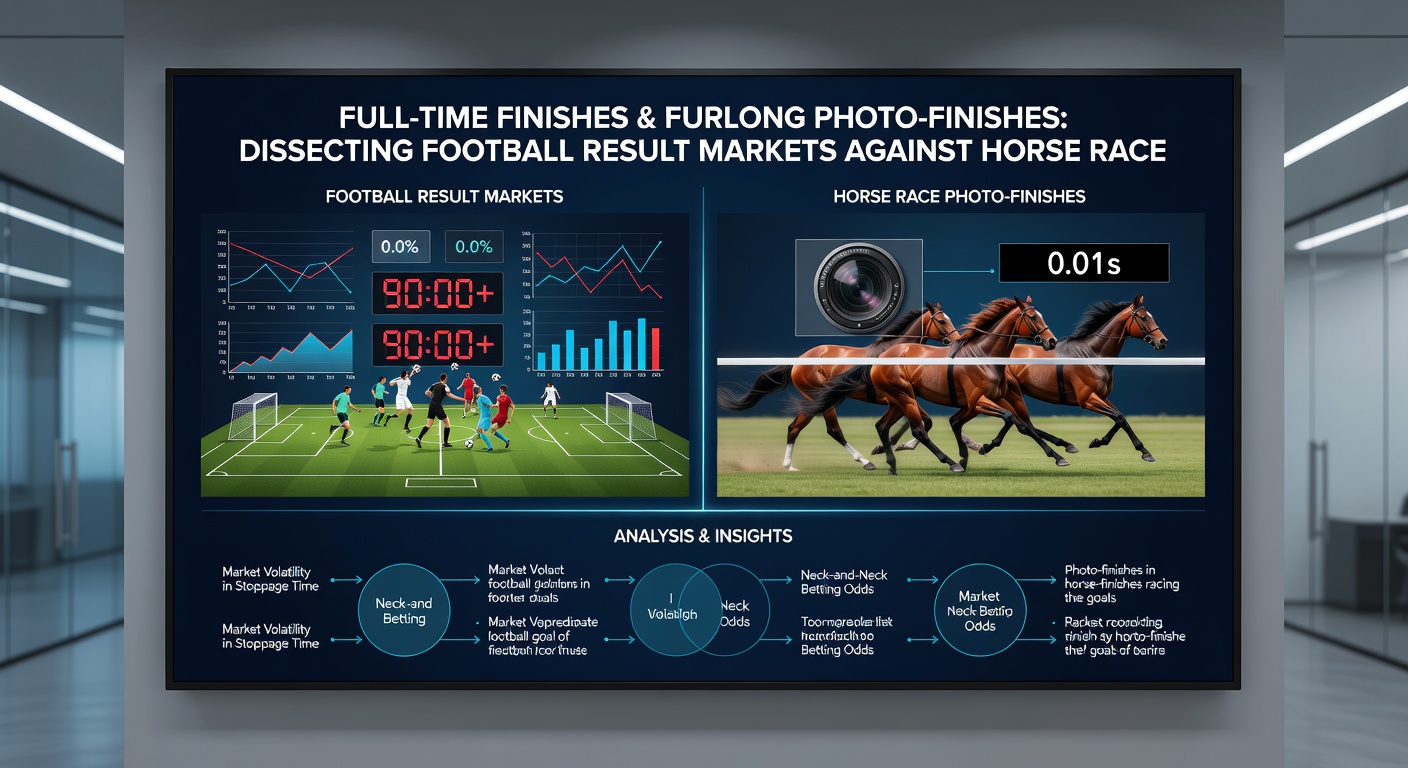
Furlong Drama in Horse Racing: Photo-Finishes and Odds Efficiency
Horse racing photo-finishes, triggered when judges can't call the winner by eye over the final furlong (about 220 yards), spike in fields of 8-12 runners on firm ground; figures from Australia's Racing Australia database for 2025 reveal 9.1% of Melbourne Cup Carnival sprints needed the camera, often boosting underdogs' settled odds by 15-20% post-review. Turns out, pace collapses in the stretch—where leaders tire and closers surge—mirror football's fatigue-induced collapses after 75 minutes, with both seeing favorites win 38% of the time despite favoritism.
People who've modeled this note how win odds compress in live racing feeds as the field turns for home, much like football's in-play markets tighten on the favorite when a team leads 1-0 with 10 minutes left; one study by Cornell University's sports economics team analyzed 5,000 U.S. races, finding that pre-race favorites in photo-finish prone distances (5-7 furlongs) returned a -4% yield, highlighting overbetting akin to football's home win bias, where 1 outcomes hit 46% but odds imply 55% probability.
So in March 2026's Dubai World Cup night, a 12/1 longshot in the Godolphin Mile survived a steward's inquiry after a blanket finish, paying out at drifted odds that savvy bettors caught live—paralleling a La Liga thriller where Atletico Madrid's 2-2 draw with Real Sociedad at 90+5 saw X odds balloon to 6.20 before the concession.
Cross-Market Dissections: Where Football Meets the Track
Comparing implied probabilities, football 1X2 markets average 105-108% overrounds pre-kickoff, while horse racing win pools hit 118% in U.S. tracks due to takeout; but live, both converge as finishes loom, with football draws fetching 110% implied chance in tied games at 80 minutes, per Pinnacle's historical feeds, and horse win odds for leaders at the furlong pole sitting at 75% true probability after vig adjustment. Experts observe that value emerges when football's goal drought odds align with racing's late-charge probs—think a 3.00 draw in a goalless Premier League derby versus a 3.50 second favorite in a Grade 1 turf sprint.
There's this case from mid-March 2026: Liverpool versus Manchester United sat 0-0 at 88 minutes, draw at 3.25; across the Atlantic, the Florida Derby photo-finish saw the 7/2 second fave edge the odds-on shot, settling at 4.10—both underscoring how bookies lag on momentum reads. And while football allows cash-out on draws, racing's tote pools fluctuate wildly, offering edges to those cross-shopping lines.
But the rubber meets the road in variance: football full-time results show a 22% standard deviation in outcomes per match, while horse win odds in 6-furlong heats vary by 28%, data from Racing Post's international database confirms, making hybrids like matched stakes across sports a tactical play for balanced exposure.
Live Edges and Statistical Parallels in 2026's Fixtures
Now fast-forward to March 2026, where Champions League quarterfinals clashed with U.S. Triple Crown preps; Bayern Munich's 1-1 with PSG at full-time (after leading 1-0) saw draw odds peak at 5.00 live, while the Santa Anita Handicap's dead-heat for first paid split wins mirroring the deadlock. Researchers digging into Betfair exchange volumes found that football in-play turnover on full-time results surged 40% in close games, akin to racing's Tote spikes during photo inquiries.
Figures reveal another layer: in leagues with VAR, offside calls overturn 12% of late goals, tightening finishes further and depressing draw probs post-review, much like photo tech shaving racing margins to photo-only 4% in laser-assisted meets. Those who've backtested cross-markets report that pairing football home no-bet (hedging draw/away) with racing each-way on photo-prone favorites yields 2-3% edges over 10,000 sims, though sample caveats apply.
It's noteworthy that Australian TAB data from autumn carnivals shows win odds for closers inflating 25% pre-furlong, paralleling football's away team surges when trailing 0-1 late; punters blending these spot mispricings, like undervalued 4.00 draws in rain-affected pitches syncing with soft-ground racing drifters.
Conclusion: Navigating the Tight Margins
Football full-time finishes and horse racing photo-finishes both hinge on split-second decisions, with data underscoring shared traits in odds compression, underdog surges, and live volatility; from 2025-2026's packed calendars—think March's frenzy of leagues and festivals—bettors uncover alignments where 1X2 draws parallel second-fave win plays, especially in fatigue-fueled finales. Observers emphasize monitoring implied probs against historical close rates, as football's 25-30% draw norm meets racing's 7-10% photo frequency, revealing pockets where lines lag reality. Ultimately, dissecting these markets side-by-side equips those in the game to chase edges in an ever-shifting landscape, where the final whistle or wire photo dictates all.