3 Jun 2026
How Pitch Textures and Court Surfaces Quietly Recalibrate Expectation Metrics Across Cricket Tests and Tennis Circuits When Layered Into Multi-Event Wager Structures
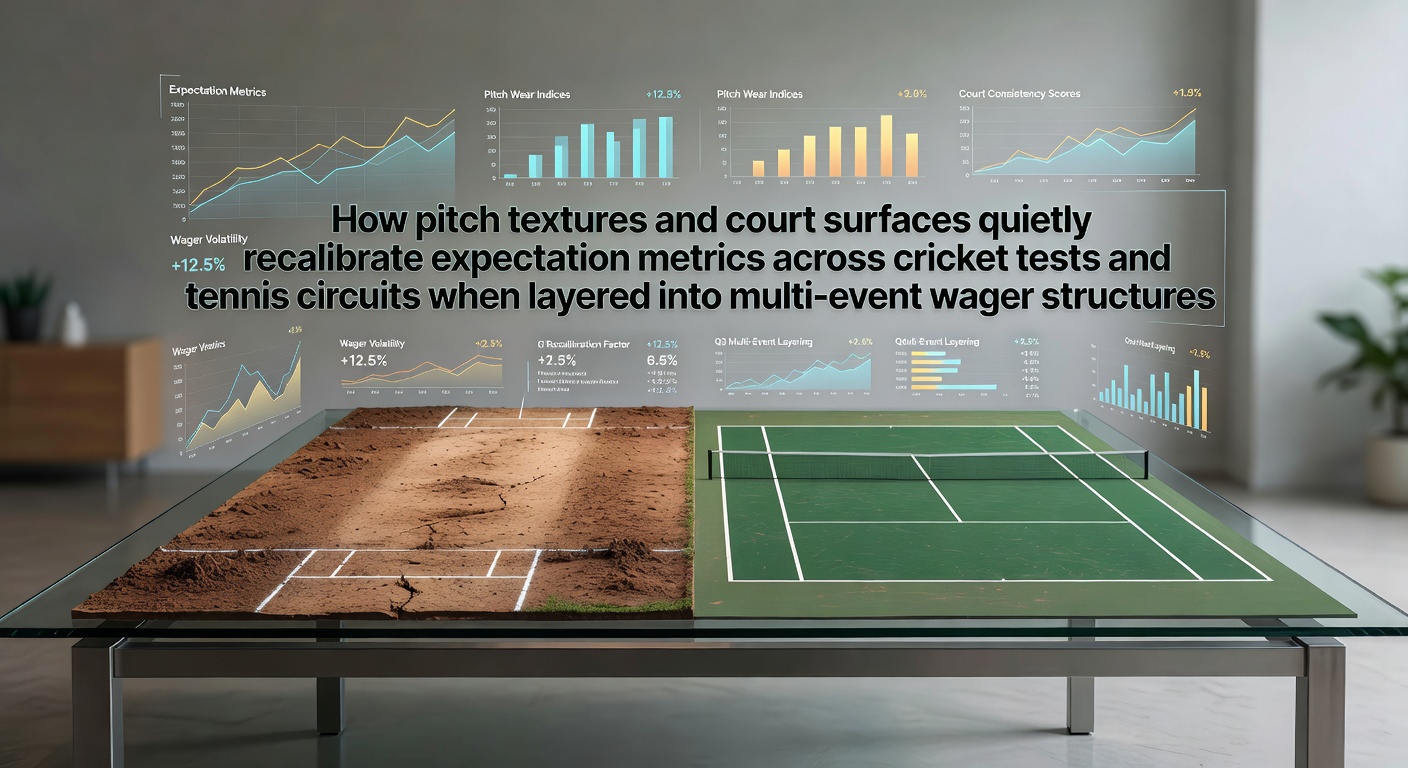
Cricket pitches and tennis courts carry distinct physical properties that alter ball behavior in measurable ways, adn these changes feed directly into statistical models used for multi-event betting lines. Different soil compositions in cricket, ranging from clay-heavy to sandy mixes, produce varying amounts of seam movement and spin turn, while tennis surfaces such as grass, clay, and hard courts modify bounce height and slide friction. When bettors combine cricket Test matches with tennis circuit events into single accumulator structures, the surface-specific adjustments shift baseline probabilities for totals, match durations, and individual performance metrics.
Cricket Pitch Textures and Their Measurable Effects
Soil moisture levels at the start of a Test match determine how much assistance bowlers receive early on, with drier surfaces in places like the subcontinent favoring spin bowlers after the first two days. Data compiled by national cricket boards shows that pitches with higher clay content retain moisture longer and generate more consistent bounce throughout a five-day match, whereas sandy pitches crack and crumble faster, increasing variable bounce rates. These patterns appear in historical scorecards where average first-innings totals drop by 30 to 50 runs on seaming pitches compared with flatter tracks.
Groundskeepers manage these textures through rolling schedules and watering regimes that remain consistent within a series, yet still produce measurable deviations across venues. In June 2026, several England-hosted Tests are scheduled on grounds known for early seam movement followed by batting-friendly conditions later in the match, creating a two-phase expectation curve that multi-leg bettors must factor into run-rate projections.
Tennis Court Surfaces adn Performance Adjustments
Grass courts accelerate serve speeds and shorten point lengths, while clay courts increase rally durations through slower bounce and higher friction. Hard courts sit between these extremes, offering medium-paced bounce that rewards baseline consistency. Tournament organizers publish surface speed ratings each season, and these ratings correlate with changes in ace percentages and break-point conversion rates across the ATP and WTA calendars. In June 2026 the grass-court swing leading into Wimbledon will feature multiple events where serve-dominated outcomes become more probable on the faster preparations.
Players adapt movement patterns to each surface, with footwork adjustments affecting injury risk profiles and recovery times between matches. Surface transitions during a single tournament week require rapid recalibration, and statistical services track how win percentages shift when athletes move from clay to grass within a short window.
Layering Surface Data Into Multi-Event Wager Structures
Accumulator builders who combine cricket Test totals with tennis set or game counts must adjust models for surface-induced variance. A cricket pitch expected to produce low-scoring conditions pairs with a grass-court tennis match where serve percentages rise, altering the joint probability distribution for the combined legs. Research from the Australian Institute of Sport documents how environmental and surface variables contribute to outcome variance in both sports, supplying quantitative inputs that betting platforms incorporate into live odds feeds.
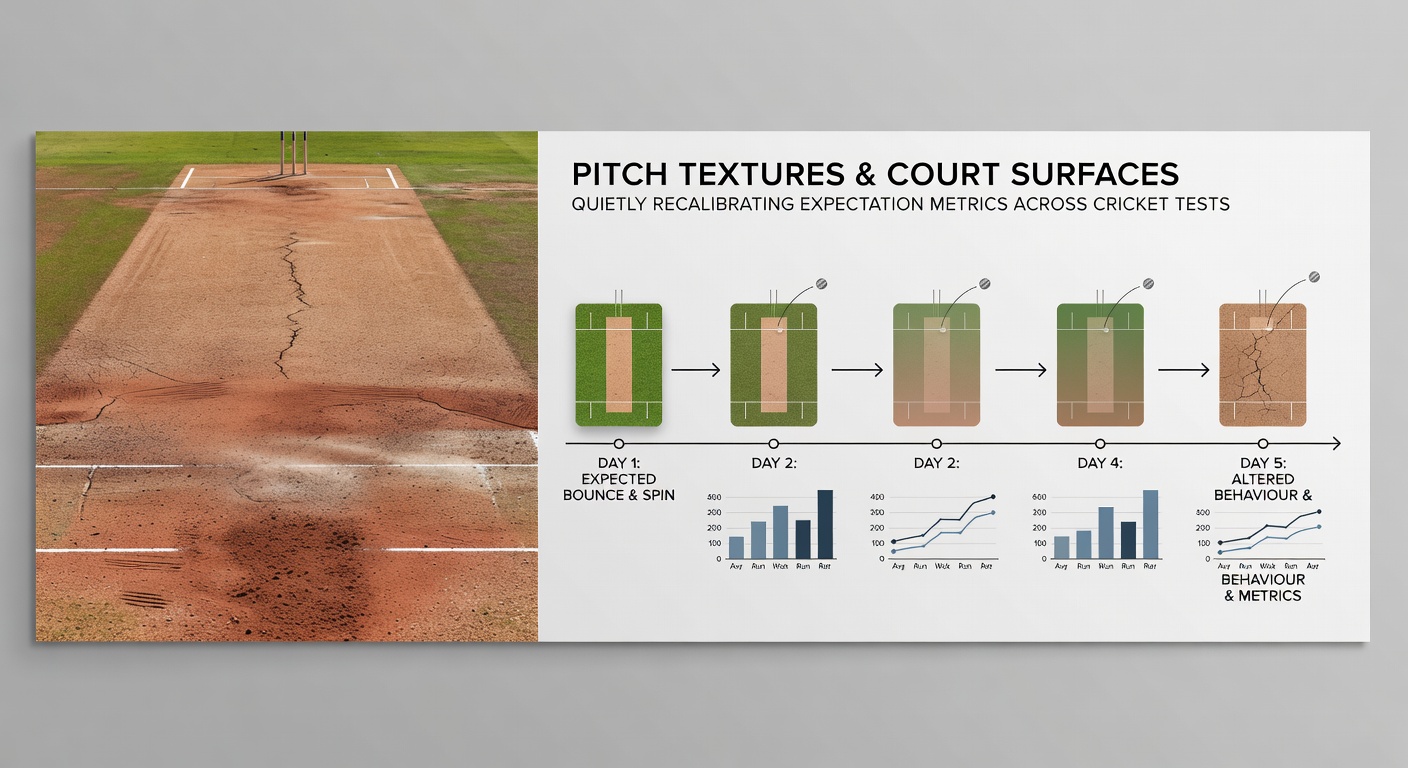
Bookmakers maintain surface-specific player ratings that update after each match, and these ratings feed into pricing engines for multi-sport parlays. When a cricket side encounters an unfamiliar pitch texture mid-series, historical data indicates a temporary drop in batting averages until the lineup adjusts, while tennis players on grass experience elevated ace counts that compress game lengths. Combining these two adjusted distributions requires covariance calculations that account for independent surface effects.
Observed Patterns in 2026 Circuits
During the early summer window in 2026, several overlapping cricket Tests and tennis tournaments create frequent opportunities for surface-aware accumulators. Venues with known pitch characteristics publish pre-match reports that include expected turn and bounce metrics, while tennis event organizers release court-speed measurements. Bettors who integrate these reports into their models see refined estimates for totals markets and individual milestone props.
Industry reports from Canadian gaming regulators note increased volume in cross-sport accumulators during periods when cricket and tennis calendars overlap, with surface adjustments cited as a primary driver of line movement. These shifts remain small on individual legs yet compound across four- or five-leg structures, producing noticeable changes in payout probabilities.
Conclusion
Pitch textures in cricket and court surfaces in tennis supply measurable inputs that recalibrate statistical expectations when events are bundled into multi-leg wagers. Data from governing bodies and performance institutes demonstrate consistent correlations between surface properties and outcome distributions, allowing precise adjustments in combined betting models. Observers tracking the June 2026 schedules can reference published surface reports and historical performance splits to align projections with the physical characteristics of each venue.