17 May 2026
How Stadium Atmospheres and Travel Demands Reshape Betting Markets in Professional Leagues
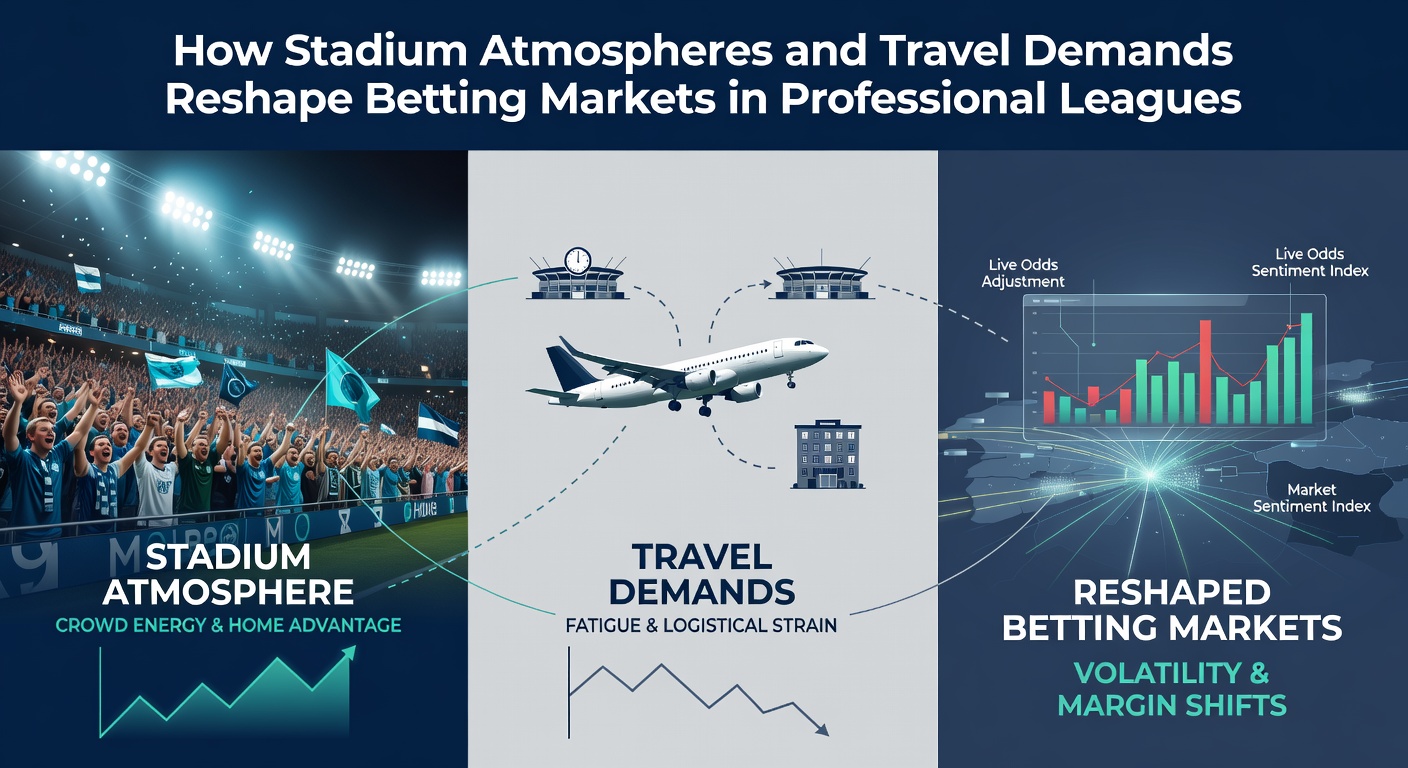
Stadium atmospheres and travel demands create measurable shifts in team performances across major professional leagues, and these factors prompt bookmakers to adjust lines accordingly. Observers note that crowd density, noise levels, and venue-specific acoustics influence player execution and officiating tendencies, while long-distance travel introduces fatigue variables that alter expected outcomes. Data from multiple seasons shows these elements combine to move betting markets away from neutral baselines, particularly in leagues with packed schedules.
Atmosphere Effects on Home Performance and Market Adjustments
Venues with high-decibel environments tend to elevate home team completion rates and reduce away-team decision-making speed, according to performance tracking systems used by leagues. Researchers have documented how sustained crowd pressure correlates with increased turnovers in basketball and missed calls in football, prompting oddsmakers to widen home favorites by fractions of a point or goal. In May 2026, several NBA playoff venues recorded average noise readings above 110 decibels during late-round games, and betting exchanges adjusted live spreads within minutes of tip-off to reflect the observed momentum.
Those who study referee behavior report that certain stadiums produce measurable bias in foul calls and penalty decisions, because officials respond to auditory cues from stands. European football data collected over five years indicates that home teams in high-capacity arenas receive fewer cards on average, leading markets to price this statistical edge into pre-match totals and handicap lines. Bookmakers monitor real-time attendance figures and historical venue trends to fine-tune opening odds, ensuring they account for atmosphere-driven variance rather than relying solely on recent form.
Travel Fatigue and Its Influence on Away Team Pricing
Cross-country flights and time-zone changes disrupt sleep cycles and recovery windows for athletes, and sports science studies quantify the resulting drops in shooting accuracy and sprint recovery. League schedules that cluster games within short intervals amplify these effects, because teams crossing multiple zones face compressed preparation periods. Betting operators incorporate travel distance and rest-day metrics into their models, often shading away-team totals lower when back-to-back road games occur.
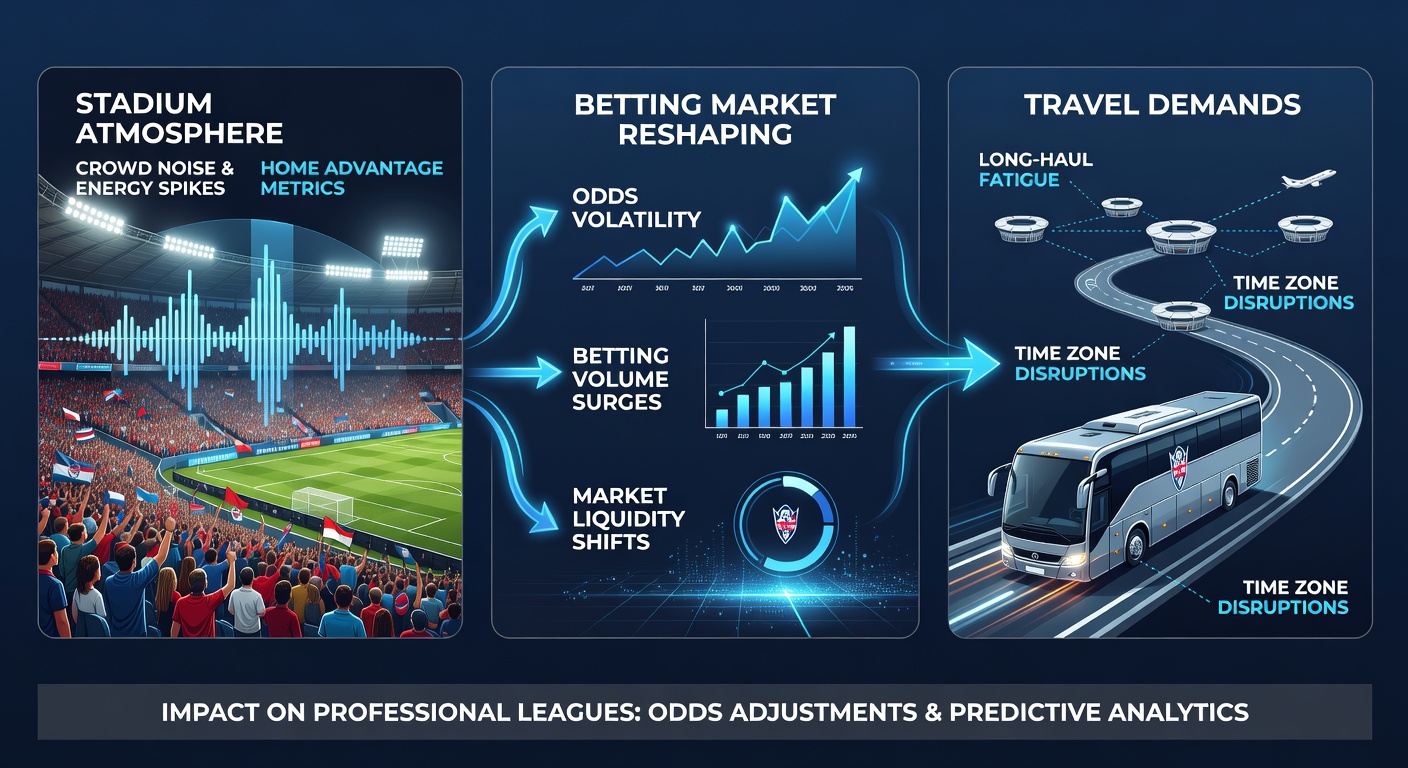
Figures from North American leagues reveal that teams traveling more than 1,500 miles the day before a contest post lower scoring averages, while European competitions show similar patterns when clubs move between distant time zones. Market makers respond by adjusting player prop lines and quarter totals, because data sets demonstrate consistent underperformance in the first half following overnight flights. Observers note that these adjustments appear most pronounced in baseball and ice hockey, where recovery windows between consecutive road contests remain brief.
Live Betting Markets and Dynamic Line Movements
Stadium conditions and travel status feed directly into live odds platforms, where algorithms recalculate probabilities after each scoring sequence or substitution. When an away side exhibits slower transitions early in a contest, traders widen totals and shift moneylines within seconds. Research published by academic groups tracking European and Australian leagues shows that crowd-induced pressure accelerates these movements, because visible fatigue compounds the initial travel disadvantage.
Those analyzing accumulator strategies observe that combining atmosphere-heavy venues with short-rest road teams produces correlated edges across multiple legs. Operators therefore monitor both static pre-match data and in-game biometric indicators released by teams, allowing them to tighten or loosen spreads as matches progress. In May 2026, several major betting platforms reported record volumes on live basketball quarters after travel-heavy road teams posted historically low first-quarter outputs.
Cross-League Patterns and Schedule Design
Professional leagues differ in how they structure travel and venue assignments, yet common threads emerge when comparing football, basketball, and baseball schedules. Organizations that cluster games in single regions reduce some fatigue variables, whereas transcontinental series heighten them. Data released by industry research bodies indicates that betting volumes spike when schedule makers release fixture lists containing multiple long-haul road trips for the same club.
Because atmosphere and travel interact, oddsmakers layer both factors into composite models rather than treating them separately. A football side returning from a midweek European fixture, for example, faces both jet lag and a hostile domestic stadium the following weekend, prompting wider handicap spreads. Similar compounding appears in basketball when teams play consecutive games in opposing conference venues with contrasting crowd profiles.
Conclusion
Stadium atmospheres and travel demands generate quantifiable performance differentials that betting markets integrate through adjusted lines, live recalibrations, and schedule-based modeling. Leagues continue to refine travel protocols and venue policies, while data providers supply increasingly granular metrics that operators use to maintain balanced books. These dynamics remain central to how professional sports betting evolves alongside changing competition calendars.