22 May 2026
Shadow Plays: How Referee Tendencies and Umpire Decisions Shape Accumulator Viability Across Football Leagues and Tennis Circuits
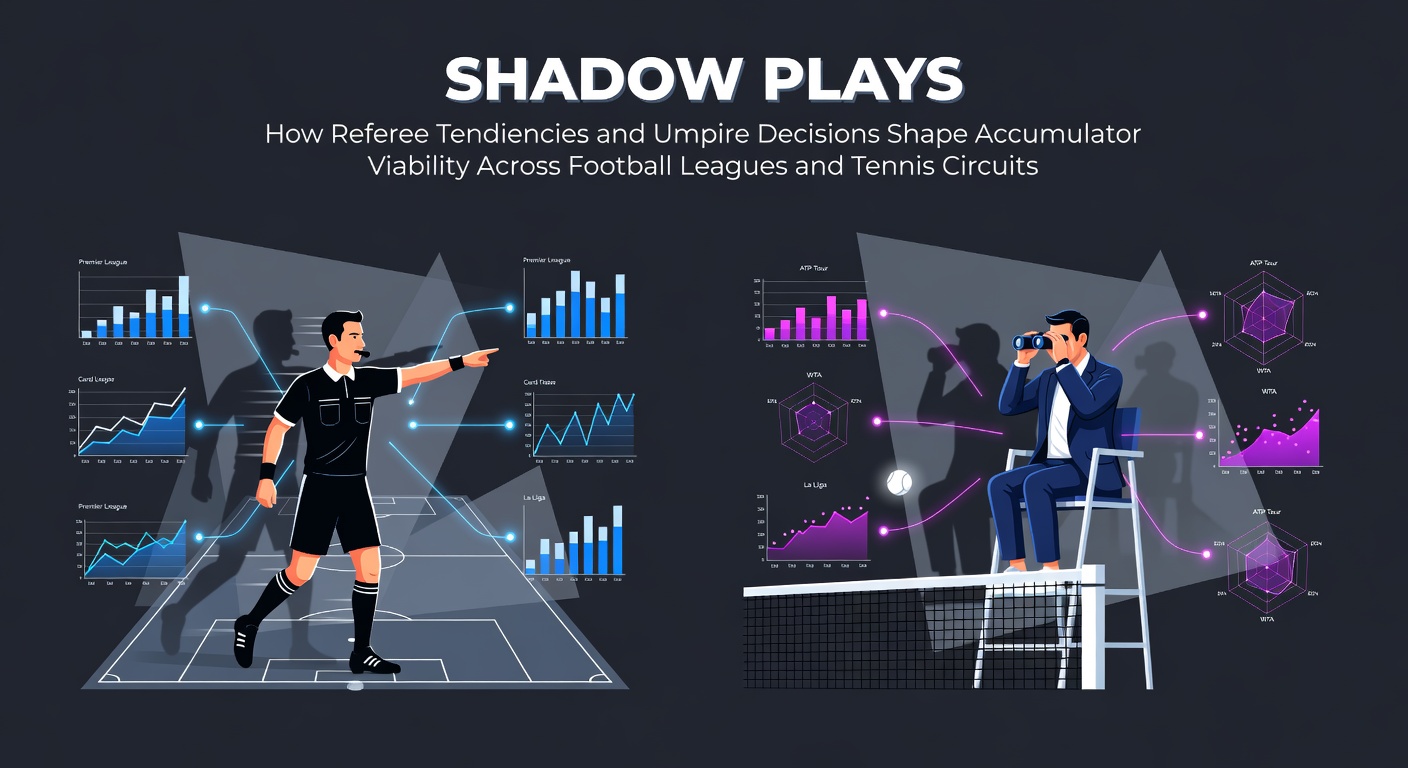
Referee tendencies and umpire calls introduce layers of variability that directly influence accumulator outcomes in both football leagues and tennis circuits, and data from recent seasons shows measurable patterns across major competitions. Observers note that certain officials consistently award more fouls or issue stricter card counts, which alters the probability profiles for markets like total cards, penalties, and set durations that often appear in multi-leg bets. Research from European football analytics groups indicates these patterns hold steady over multiple campaigns, giving bettors concrete variables to track when constructing accumulators that span several fixtures or matches.
Patterns in Football Referee Behavior Across Leagues
League-specific referee pools create distinct environments for accumulator builders because each competition maintains its own cadre of officials with documented habits. In the Premier League, for instance, figures reveal higher average card rates during evening fixtures compared with midday kickoffs, while Bundesliga referees show elevated penalty awards in matches involving teams that press high. These tendencies matter for accumulators because one leg relying on under 3.5 cards can collapse when a referee known for quick bookings takes charge, and the effect compounds when several such legs combine in a single slip. European governing bodies publish annual disciplinary reports that allow analysts to map referee assignments weeks in advance, turning what once felt random into a predictable input for bet sizing and selection.
Impact on Accumulator Construction
Accumulators that include both over-card props and clean-sheet outcomes become especially sensitive to referee rotation schedules, and schedulers in May 2026 placed several high-profile matches under officials with above-average foul counts. When a single referee oversees two legs within the same accumulator, the correlation between those outcomes rises sharply because the official's style affects both games in similar ways. Data indicates that accumulators built around leagues with centralized referee training programs, such as those in the Netherlands and Portugal, display lower variance in card totals than competitions that rely on regional pools, which explains why professional syndicates often weight certain leagues more heavily during accumulator runs that stretch across weekends.
Umpire Decision Frameworks in Tennis Circuits
Tennis umpires operate under different constraints yet produce comparable effects on accumulator viability through their handling of challenges, time violations, and code enforcement. ATP and WTA data logs show that some chair umpires sustain higher overrule rates on line calls, which can extend set lengths and push total-games markets past expected thresholds. These extensions matter for accumulators that pair tennis sets with football goal counts because even a single prolonged tiebreak alters the timing and psychological pressure on later legs. Circuit-wide statistics compiled by international tennis federations demonstrate that clay-court events in spring and early summer feature more challenge success rates than hard-court tournaments, giving accumulator constructors an additional seasonal variable to incorporate when planning multi-surface bets.
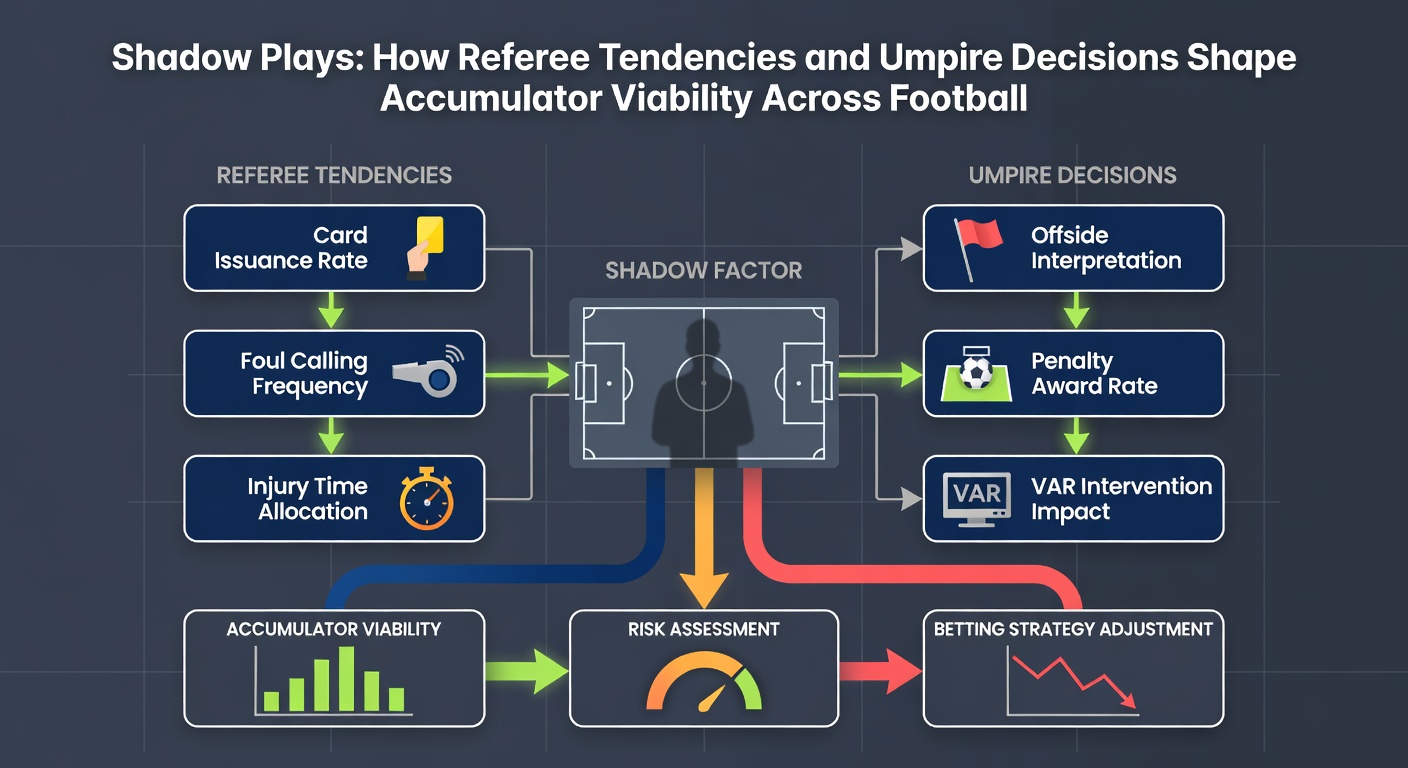
Researchers at sports science departments in Australia and Germany have examined how umpire experience levels correlate with decision consistency, and their findings suggest newer officials on the Challenger circuit produce wider spreads in point-duration statistics than veteran Grand Slam umpires. Accumulators that mix futures from both elite and developmental tours therefore encounter different risk profiles depending on which officials receive assignments, and tracking these assignments through official tournament releases has become standard practice among data-driven bettors.
Cross-Sport Correlations and Accumulator Adjustments
Football and tennis markets interact within accumulators when bettors combine card props with set totals or penalty awards with game spreads, and referee or umpire tendencies create hidden linkages between the two sports. A referee who favors advantage play in a late football fixture can indirectly influence the perceived value of a tennis over-games leg scheduled for the same evening, because both outcomes hinge on tolerance for extended rallies or prolonged stoppages. Industry reports from Canadian gaming research centers highlight that accumulators spanning these sports show higher completion rates when constructors filter officials by historical variance scores rather than simple averages, because low-variance officials reduce the chance that one unexpected decision derails multiple legs simultaneously.
Regulatory updates issued in early 2026 by bodies overseeing international competitions further standardized challenge protocols in tennis and video review windows in football, yet these changes have not eliminated differences between individual officials. Observers tracking May 2026 tournaments note that accumulators built around clay-court events paired with end-of-season European football fixtures continue to reflect the same referee-driven patterns observed in prior years, confirming that official tendencies remain a durable factor even after rule adjustments.
Conclusion
Referee and umpire tendencies function as measurable inputs that shape accumulator viability across football leagues and tennis circuits, and available data sets allow systematic incorporation of these variables into bet construction. Leagues and tours that publish detailed disciplinary and decision logs provide the raw material for such analysis, while ongoing assignment schedules in May 2026 continue to supply fresh data points. Those who integrate official histories with fixture calendars gain a clearer view of how shadow decisions on the field or court ultimately determine whether multi-leg bets reach their intended conclusions.