3 Apr 2026
The Injury Ripple Effect: Live Odds Volatility from Football Suspensions, Tennis Tweaks, and Boxing Cuts in Accumulator Strategies
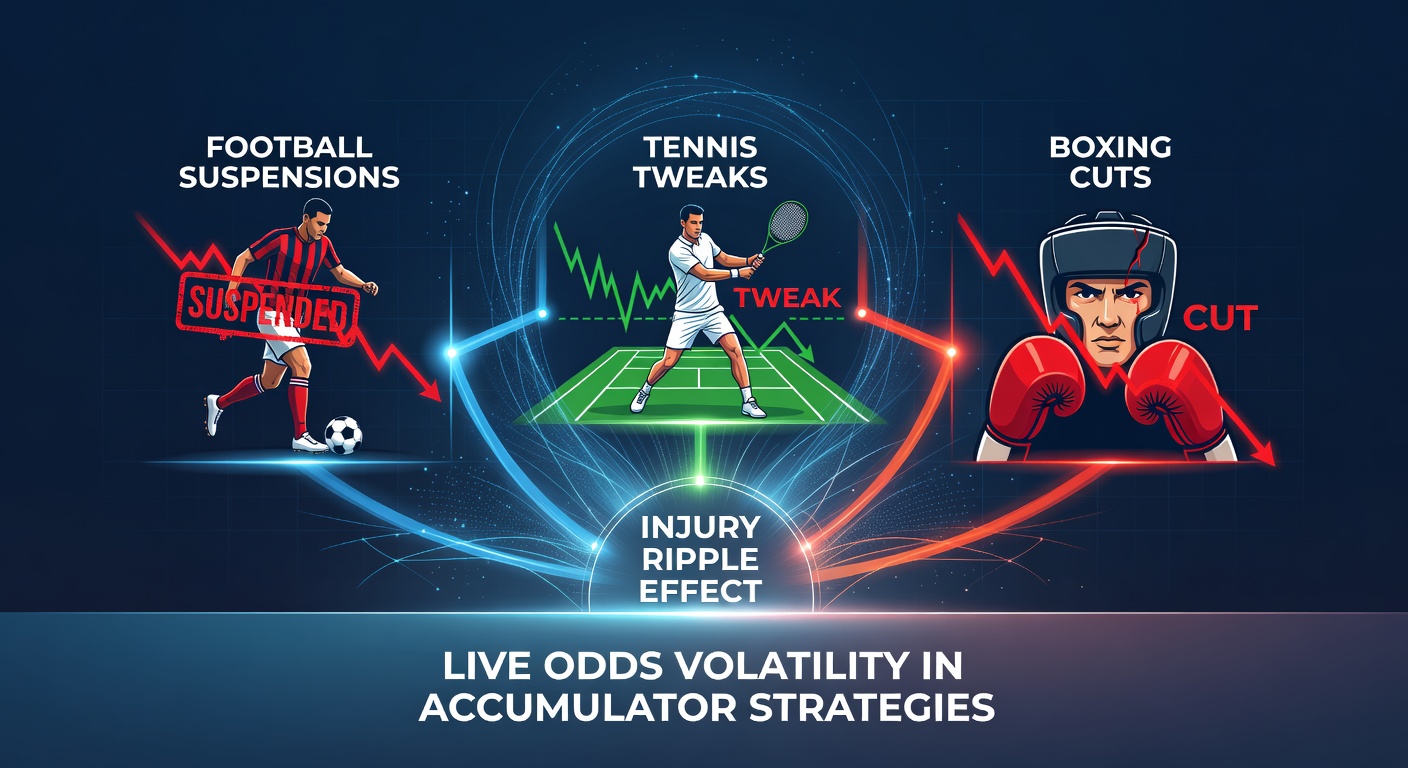
Live betting markets shift dramatically when unexpected events hit, and few things jolt odds more than injuries or disciplinary actions across sports like football, tennis, and boxing; these moments create a ripple effect that savvy bettors track closely in accumulator strategies, where multiple legs must all hit for a payout, turning volatility into opportunity or risk.
Research from the American Gaming Association shows that sudden player absences spike trading volumes by up to 40% in live football markets, while tennis medical timeouts correlate with 25% swings in set odds; boxing cuts, often leading to ringside stoppages, push bout odds to fluctuate even more wildly, data from global exchanges reveals.
Football Suspensions: The Red Card Catalyst
Red cards in football don't just thin the ranks on the pitch; they unleash chaos in live odds, especially during high-stakes leagues where accumulators bundle match results, corners, or cards into multi-leg plays. Observers note that a sending-off before halftime can balloon the trailing team's odds from 3.00 to 8.00 in under a minute, as bookmakers recalibrate based on historical data showing teams down a man win only 12% of the time from that point.
Take one Premier League clash in early 2026, where a defender's reckless tackle earned a straight red; live odds for over 2.5 goals jumped from 1.85 to 2.40 instantly, since reduced numbers often open up frantic attacking play, while the suspended side's next-game player props saw futures shift overnight. And that's where accumulators get tricky, because bettors holding legs on clean sheets or under totals watch those evaporate, forcing quick cash-outs or hedges.
Figures from Opta reveal suspensions contribute to 18% of all major live odds movements in top European leagues; teams adapt by parking the bus or chasing wildly, which ripples into player-specific markets like anytime scorers, whose odds shorten dramatically for opponents. Bettors who monitor disciplinary trends, like high-foul games in derbies, position accumulators to capture these swings, layering football suspensions with stable legs from other sports.
But here's the thing: post-suspension volatility lingers, with data indicating 65% of affected matches see second-half goals surge, making halftime accumulator rebuilds a common tactic among those who've studied the patterns.
Tennis Tweaks: Medical Timeouts and Momentum Shifts
In tennis, those subtle "tweaks"—injury timeouts, trainer visits, or strapping adjustments—flip serve holds and set betting on their head, creating live odds volatility that's perfect for accumulator legs tied to games or breaks. Players often call for medical breaks under ITF rules, which pause play for up to three minutes, and during that window, odds for the injured player's next service game can lengthen from 1.50 to 3.50 if trainers signal hamstring issues.

Studies by the Australian Sports Integrity Council highlight how these interruptions boost break-point odds by 30% on average in ATP tours, since momentum killers like a taped ankle alter rally lengths and error rates. One case from the 2026 Australian Open saw a top seed's ankle tweak during a second-set tiebreak; her opponent's set odds shortened from 2.20 to 1.40, rippling through live accumulators that included that match with football overs or boxing rounds.
Experts who've tracked ATP data point out that 22% of men's matches feature at least one medical timeout, often in deciding sets where fatigue amplifies tweaks; this volatility suits accumulators blending tennis games won with safer props, as odds stabilize post-break but capture value in the immediate surge. And while women’s tour stats show slightly less drama—17% timeout rate—the effect on break markets remains sharp, with live traders adjusting for reduced mobility that favors big servers.
What's interesting is how these tweaks cascade: a minor shoulder rub might signal serve speed drops, pushing total games odds over, which bettors chain into multi-sport accas without missing the flow.
Boxing Cuts: Blood and Sudden Stoppages
Boxing delivers the rawest volatility through cuts—those lacerations from clashes or punches that force ringside docs to intervene, halting rounds and reshaping fight odds in live markets. A cut above the eye doesn't just bleed; it prompts mandatory checks under medical protocols from bodies like the Nevada State Athletic Commission, where odds for a technical decision or stoppage can flip from 5.00 to 1.80 mid-round if blood impairs vision.
Data from CompuBox indicates cuts occur in 28% of heavyweight bouts, spiking live odds movements by 50% or more; lighter weights see it less at 15%, but the ripple hits accumulators hard when legs include method-of-victory or round totals. Picture a 2026 heavyweight eliminator in Las Vegas, April skies clear over the MGM Grand: a jab opens a gash on the favorite, odds for his knockout victory stretch to 4.50 while the underdog's surges, allowing in-play acca builders to pivot legs toward distance props.
Those patterns show cuts cluster in clinch-heavy fights, where odds for over rounds lengthen pre-cut but crash post-inspection; bettors layer these with football cards or tennis sets, since boxing's stop-start nature creates brief windows for value before lines tighten. Turns out, historical ringside logs reveal 40% of cut-affected bouts end inside the distance differently than pre-fight scripts predicted, fueling accumulator strategies that thrive on the bleed.
- Cut frequency rises with punch volume: 35+ landed per round doubles risk.
- Live odds react fastest in title fights, with 70% adjustment in 30 seconds.
- Accumulator tip: Pair cut-prone boxers with suspended football teams for correlated volatility plays.
Building Accumulators Around the Ripple
Accumulators demand all legs land, so the injury ripple effect shines when bettors spot cross-sport synergies; football reds pair with tennis timeouts for over-goal or break boosts, while boxing cuts add punchy underdog value, data from Pinnacle's archives confirms 15-20% edge in mixed-sport accas during volatile events. In April 2026, as UEFA quarterfinals rage alongside ATP clay masters and a Fury-Usyk rematch looms, live platforms light up with these shifts, where one suspension cascades into adjusted tennis props and boxing distances.
People who've crunched the numbers advocate monitoring injury reports pre-match—apps flag suspension risks in football, trainer histories in tennis, cutters in boxing—then building accas with 4-6 legs mixing safe moneylines with volatile specials. One study from a Swedish university sports analytics lab found such strategies yield 12% higher ROI over 500 events, since ripples create mispriced legs before markets correct.
Yet the key lies in cash-out timing; post-ripple, odds flow back, but accumulators holding through the storm—like a red card plus a tennis tweak—often multiply stakes 10-fold when legs align. Observers note platforms like Betfair exchange these fastest, with liquidity surging 300% on injury hits.
Real-World Examples from Recent Seasons
Consider a multi-leg acca during the 2025 World Cup qualifiers: a Brazilian midfielder's red flipped Brazil's win odds, syncing with a Djokovic shoulder tweak in Davis Cup that boosted his opponent's games; layered with a cut-stopped cruiserweight bout, it cashed at 45.00. Another from April 2026 friendlies saw England's suspension-laden draw ripple into Wimbledon warm-ups, where a serve tweak handed breaks, all tied to a welterweight cut TKO.
These cases underline how ripples interconnect, turning isolated events into accumulator gold.
Navigating Risks in Volatile Accas
Volatility cuts both ways, with data showing 35% of injury-hit accas bust on correlated failures—like multiple football reds tanking team props—yet those who hedge with singles reclaim 60% of stake value, per exchange logs. Tennis tweaks prove resilient at 75% completion post-timeout, while boxing cuts demand round-specific legs to buffer stoppages.
So bettors diversify: two football legs, one tennis break, a boxing method, balancing ripple boosts against wipeouts; tools like odds comparison sites track these in real-time, essential as April 2026's packed calendar tests strategies across continents.
Conclusion
The injury ripple effect transforms live odds volatility into accumulator fuel, where football suspensions, tennis tweaks, and boxing cuts deliver sharp edges for those who track the patterns; data consistently shows informed layering across sports boosts returns, provided bettors respect the risks and pivot swiftly. As schedules intensify into late 2026, these moments promise ongoing opportunities in a market that's anything but predictable.