10 Jun 2026
Travel Fatigue Effects on International Tennis and Cricket Squads Altering Global Betting Markets
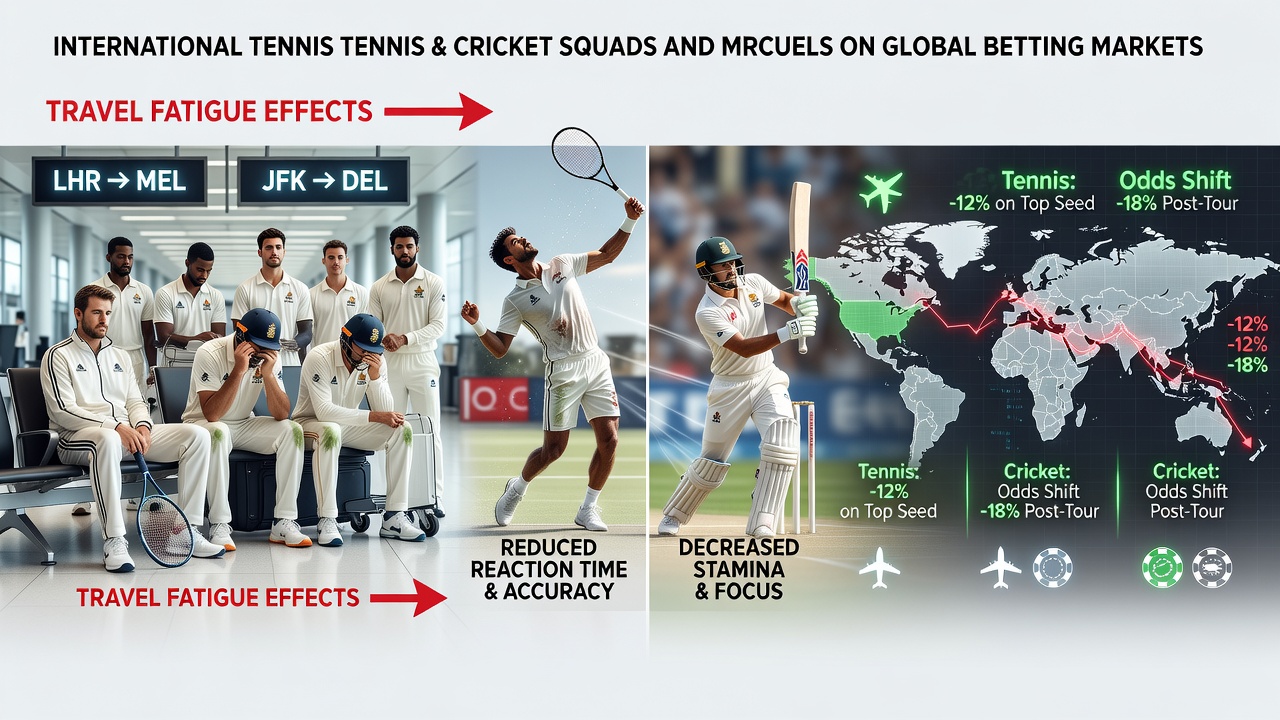
Long-haul flights across multiple time zones place measurable strain on athletes in tennis and cricket, and data from performance tracking organizations shows these effects ripple into global betting markets where odds shift in response to documented declines in serve accuracy and batting averages. Researchers at institutions such as the University of Queensland have examined recovery timelines after transcontinental travel, noting that players require between 48 and 72 hours to regain baseline reaction speeds when crossing more than five zones. Bookmakers incorporate these patterns into pre-match lines, particularly for events scheduled immediately after major tours conclude.
Patterns in Tennis Travel and Performance Records
Tennis calendars pack consecutive tournaments across continents, and ATP records indicate that players who complete flights exceeding 10 hours exhibit reduced first-serve percentages in the opening rounds of the next event. Data collected during the 2025 season revealed average drops of 4.2 percentage points in serve efficiency for athletes arriving within 36 hours of a prior match. Observers note that these dips appear most consistently among competitors ranked outside the top 20, whose schedules often include additional qualifying rounds and extended travel segments.
June 2026 features several high-profile swing events that will test recovery protocols once more, with surface changes from clay to grass coinciding with long-distance arrivals for many squads. Performance analysts track metrics such as unforced error rates and rally lengths, then feed the information into models that betting platforms use to calibrate live odds. When fatigue indicators rise, markets respond by adjusting totals downward in early sets, creating measurable movement in accumulator selections that combine multiple matches.
Cricket Squad Logistics and Match Outcome Data
International cricket tours involve extended stays across hemispheres, and ICC match statistics demonstrate that teams arriving after flights longer than 12 hours post lower run rates in the first innings of Test matches. A 2024 study compiled by Canadian sport science researchers tracked 18 bilateral series and found an average reduction of 12 runs per innings when the touring side had less than four days between arrival and the opening fixture. These figures appear in post-series reports that influence futures markets for upcoming bilateral contests.
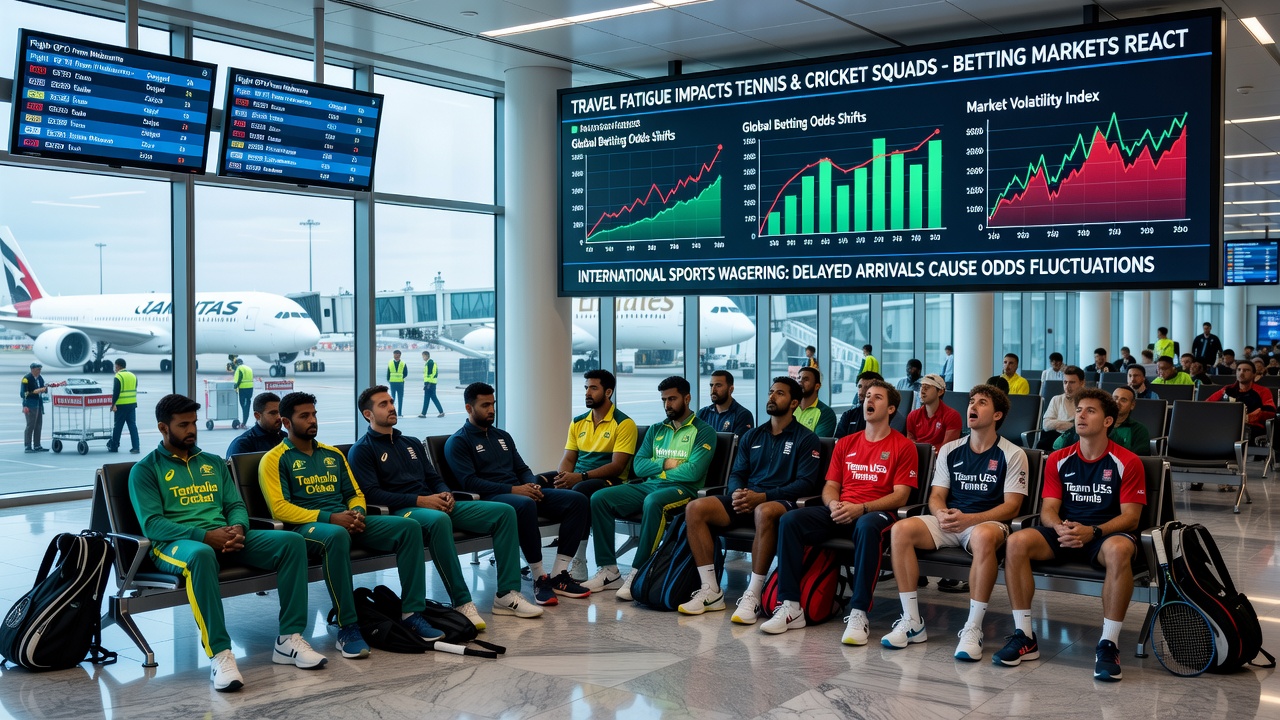
White-ball formats show similar trends, though the impact registers more clearly in bowling economy rates than batting totals. Limited-overs squads traveling from Australia to England or from South Asia to the Caribbean encounter cumulative sleep disruption that compounds across a five-match series. Market makers at major exchanges monitor these patterns through injury reports and warm-up match results, then revise over-under lines accordingly before the first ball is bowled.
Market Adjustments and Cross-Sport Accumulators
Betting operators aggregate travel-related performance data from both sports to refine accumulator products that span tennis and cricket fixtures. When multiple squads appear on the same card after recent long-haul journeys, implied probabilities shift in ways that reflect documented historical outcomes rather than current form alone. European regulatory filings from the Malta Gaming Authority indicate that operators must maintain transparent records of how external variables such as travel distance factor into odds compilation, and these disclosures reveal systematic adjustments during peak tour periods.
Live betting platforms further refine lines once matches begin, incorporating real-time indicators such as serve speed in tennis or dot-ball percentages in cricket. These micro-adjustments become more pronounced when squads have documented limited recovery windows. Historical datasets covering the 2023-2025 period show that early-session totals markets in both sports move an average of 0.35 points when pre-match fatigue flags are active, creating opportunities for bettors who track travel schedules alongside statistical models.
Conclusion
Travel fatigue registers as a quantifiable variable in tennis and cricket performance records, and global betting markets integrate these measurements into pre-match and live odds structures. Organizations monitoring athlete recovery continue to publish datasets that operators reference when setting lines for events scheduled after extended tours, including those planned for June 2026. The resulting market movements reflect aggregated historical patterns rather than isolated incidents, maintaining consistency across different regulatory jurisdictions and exchange platforms.